Mrinal Sen
Mrinal Sen is an Indian director, best known for Tamil cinema. Mrinal Sen began their career in 1968. With 30 credits to their name, Mrinal Sen remains one of the most prolific and celebrated talents in the industry. Spanning 50+ years, Mrinal Sen's career remains one of the longest and most celebrated in Tamil cinema.
Career Milestones
Film debut
View film →Defining Moments
Release of 'Bhuvan Shome'
The film's critical and artistic success marked a turning point, establishing Sen as a leading voice in India's alternative cinema and pioneering the government-funded 'New Cinema' movement.
Release of 'Kharij' (The Case Is Closed)
The film, a powerful indictment of middle-class hypocrisy, won the National Film Award for Best Feature Film and the Jury Prize at the Cannes Film Festival, gaining him major international recognition.
Receiving the Dadasaheb Phalke Award
He was honored with India's highest cinematic award for his lifetime contribution to Indian cinema.
Mrinal Sen by the Numbers
If you watched every Mrinal Sen film back-to-back, you'd be at it for roughly 7 hours. Most-paired with Shabana Azmi — 3 films together.
Filmography
See all 30 credits →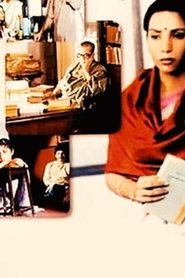
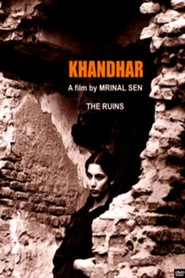
Collaboration Network
Career Analytics
Language Distribution
Films by Decade
Top Co-Actors
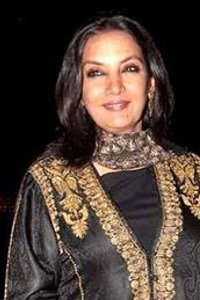
See all →Mrinal Sen has worked most frequently with Shabana Azmi (3 films).
Did You Know?
Mrinal Sen was a pioneering Indian filmmaker and a key figure in the parallel cinema movement.
He was a recipient of the Padma Bhushan, one of India's highest civilian awards.
His film 'Bhuvan Shome' (1969) is considered a landmark in Indian cinema and helped launch the New Indian Cinema movement.
He served as a member of the Rajya Sabha, the upper house of the Indian Parliament.
He won the National Film Award for Best Feature Film three times, for 'Mrigayaa' (1976), 'Oka Oori Katha' (1977), and 'Kharij' (1982).
Legacy & Influence
Mrinal Sen was a pioneering filmmaker and a key architect of the Indian New Wave cinema, alongside contemporaries like Satyajit Ray and Ritwik Ghatak. His career, spanning over five decades, is marked by a profound commitment to political and social realism, often employing experimental narrative techniques to critique societal structures. Sen's early films, such as 'Neel Akasher Nichey' (1959), showed his humanist concerns, but it was with the 'Calcutta Trilogy'—'Interview' (1971), 'Calcutta 71' (1972), and 'Padatik' (1973)—that he cemented his reputation as a fiercely political and formally innovative director. These films, born from the socio-political turmoil of 1970s West Bengal, used Brechtian alienation effects, fragmented narratives, and direct address to dissect urban decay, class conflict, and political disillusionment. Unlike Ray's nuanced humanism, Sen's approach was often more confrontational and agitprop, aiming to provoke the audience into critical thought and action. His work extended beyond Bengal with films like 'Khandhar' (1984) and 'Ek Din Pratidin' (1979), which continued his exploration of isolation, middle-class morality, and existential despair with poignant subtlety. Sen's international acclaim, including awards at Cannes, Berlin, and Moscow, brought global recognition to a politically engaged strand of Indian cinema. His legacy lies in expanding the language of Indian film—demonstrating how cinema could be a tool for radical social inquiry without sacrificing artistic integrity. He inspired generations of filmmakers to tackle uncomfortable truths and experiment with form, ensuring the New Wave was not just a style but a sustained ideological intervention in Indian cultural discourse.