Tatineni Prakash Rao
Tatineni Prakash Rao is an Indian director, best known for Tamil cinema. Tatineni Prakash Rao began their career in 1964. With 30 credits to their name, Tatineni Prakash Rao remains one of the most prolific and celebrated talents in the industry. Spanning 60+ years, Tatineni Prakash Rao's career remains one of the longest and most celebrated in Tamil cinema.
Career Milestones
Film debut
View film →Highest rated: Padagotti (7.5)
View film →Tatineni Prakash Rao by the Numbers
If you watched every Tatineni Prakash Rao film back-to-back, you'd be at it for roughly 4 hours.
Filmography
See all 30 credits →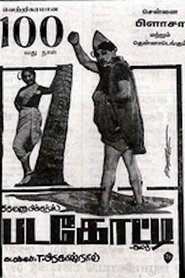
Career Analytics
Language Distribution
Films by Decade
Legacy & Influence
Tatineni Prakash Rao was a pioneering director, producer, and screenwriter in Telugu cinema, active from the late 1940s through the 1970s. He is best remembered for his significant contributions to the social film genre, using cinema as a medium to address contemporary societal issues with a blend of entertainment and message-oriented storytelling. His career trajectory saw him evolve from an assistant director to a formidable filmmaker who collaborated with major stars of the era. A landmark film in his career was 'Maa Bhoomi' (1979), a powerful narrative on the Telangana peasant struggle, which is celebrated for its realistic portrayal and remains a classic of political cinema. Earlier, he directed the critically acclaimed 'Mana Desam' (1949), which dealt with post-independence idealism. Prakash Rao often worked with renowned actor Akkineni Nageswara Rao, creating successful films like 'Samsaram' (1950) and 'Devadasu' (1953), the latter being a notable adaptation of Sarat Chandra Chattopadhyay's novel. His film 'Rojulu Marayi' (1955) was another major hit, showcasing his skill in blending social themes with commercial elements. As a producer under his banner, Prakash Rao Pictures, he supported meaningful cinema. His directorial style was known for its strong narrative structure, focus on character development, and ability to resonate with the common audience while provoking thought. He played a crucial role in shaping the thematic depth of Telugu cinema during its golden age, moving beyond purely mythological or fantastical plots to stories rooted in social reality. His work laid groundwork for future filmmakers to explore socially relevant subjects, cementing his legacy as a director who believed in the transformative power of cinema.