Dilip Chitre
Dilip Chitre is an Indian director, best known for Tamil cinema. Dilip Chitre began their career in 1983. With 30 credits to their name and an average audience rating of 6.5, Dilip Chitre remains one of the most prolific and celebrated talents in the industry. An emerging voice in Tamil cinema, Dilip Chitre is already attracting significant attention for their distinctive work.
Career Milestones
Film debut
View film →Highest rated: Godam (6.5)
View film →Defining Moments
Documentary 'Godam'
Directed the documentary film 'Godam', which was critically acclaimed for its portrayal of tribal life.
Sahitya Akademi Award
Received the prestigious Sahitya Akademi Award for his Marathi poetry collection 'Kavite'.
Dilip Chitre by the Numbers
If you watched every Dilip Chitre film back-to-back, you'd be at it for roughly 2 hours.
Filmography
See all 30 credits →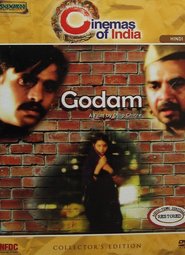
Career Analytics
Language Distribution
Films by Decade
Did You Know?
Dilip Chitre was a renowned Indian poet, painter, and filmmaker, not primarily a film actor.
He was a leading figure in the 'Little Magazine Movement' in Marathi literature.
Chitre is best known for his translations of the 17th-century Marathi saint-poet Tukaram's work into English.
He received the Sahitya Akademi Award in 1994 for his Marathi poetry collection 'Kavite'.
He directed the acclaimed documentary film 'Godam' (1985), which explored the life of a tribal community.
Legacy & Influence
Dilip Chitre was a towering figure in modern Indian literature and arts, whose profound impact on Indian cinema stems primarily from his work as a poet, writer, painter, and critic, rather than as a mainstream film industry professional. His most significant cinematic contribution was as a pioneering translator and subtitler, most famously for the films of Satyajit Ray. Chitre's English subtitles for Ray's films were instrumental in bridging the cultural and linguistic gap, introducing Ray's Bengali masterpieces to international audiences and critics at film festivals worldwide. This work was crucial in shaping the global reception and acclaim of Indian parallel cinema. Furthermore, Chitre was an influential film critic and scholar. His writings, often featured in publications like 'The Times of India' and his own journal 'Shabda,' provided rigorous, intellectual critique that helped frame the discourse around Indian art-house and independent filmmaking. He championed a cinema of substance and artistic integrity. Beyond criticism, Chitre also forayed into filmmaking himself, directing the Marathi experimental film 'Godam' (1985), which reflected his avant-garde sensibilities and literary themes. His career trajectory was that of a polymath who used the medium of film as one of several avenues for artistic and cultural expression. His primary legacy in cinema lies in his role as a cultural mediator—through translation and criticism—who elevated the intellectual appreciation of Indian films both domestically and abroad, ensuring that the works of masters like Ray were understood in their full depth by a global viewership.