Karsh Kale
Karsh Kale is an Indian composer, best known for Tamil cinema. Karsh Kale began their career in 2019. With 30 credits to their name and an average audience rating of 7.9, Karsh Kale remains one of the most prolific and celebrated talents in the industry. An emerging voice in Tamil cinema, Karsh Kale is already attracting significant attention for their distinctive work.
Career Milestones
Film debut
View film →Highest rated: Gully boy (7.9)
View film →Defining Moments
Debut Album 'Realize'
Released his influential debut solo album 'Realize', establishing him as a leading voice in electronic Indian fusion music.
Soundtrack for 'The Namesake'
Composed the musical score for Mira Nair's film 'The Namesake', bringing his fusion sound to a major international cinematic release.
Collaborative Album 'Breathing Under Water'
Co-created the album 'Breathing Under Water' with Anoushka Shankar, a significant crossover project blending Indian classical and electronica.
Karsh Kale by the Numbers
If you watched every Karsh Kale film back-to-back, you'd be at it for roughly 2 hours.
Filmography
See all 30 credits →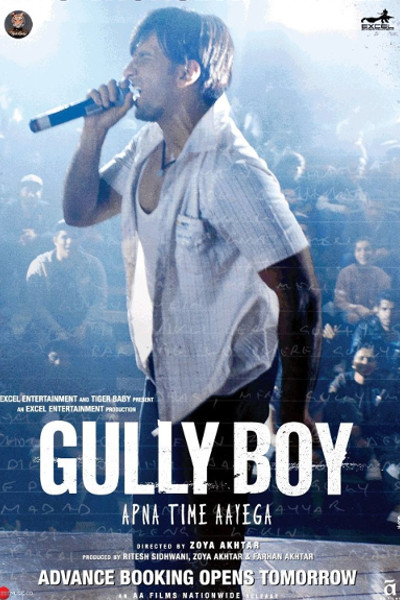
Career Analytics
Genre Breakdown
Language Distribution
Films by Decade
Did You Know?
Karsh Kale is a pioneering Indian-American musician, producer, and composer known for blending electronic music with Indian classical and fusion genres.
He is considered a key figure in the 'Asian Underground' music movement that gained prominence in the late 1990s and early 2000s.
Karsh Kale has collaborated with renowned artists like Anoushka Shankar, Zakir Hussain, and Sting.
He is a skilled tabla player and drummer, often incorporating live percussion into his electronic productions.
Karsh Kale composed the score for the 2006 Mira Nair film 'The Namesake', contributing to its acclaimed soundtrack.
Legacy & Influence
Karsh Kale is a pioneering figure who has significantly shaped the landscape of contemporary Indian music and its intersection with global cinema. As a composer, producer, and multi-instrumentalist, his primary contribution lies in being a foundational architect of the 'Asian Underground' movement, seamlessly blending Indian classical and folk traditions with Western electronic music, rock, and drum & bass. His work transcends the conventional boundaries of film music, influencing the sonic palette available to Indian cinema. Kale's career trajectory began in the New York music scene, where his early albums like 'Realize' (2001) and 'Liberation' (2003) gained critical acclaim for their innovative fusion. This established him as a key voice for a new generation, creating a modern, global identity for Indian sounds. His impact on cinema is most evident through his original scores and collaborations. He composed the background score for films like 'Bombay Boys' (1998) and 'The Last Lear' (2007), introducing a fresh, ambient, and rhythmically complex layer to the narrative. His prolific collaboration with director Anurag Kashyap, notably on the soundtrack for 'Gulaal' (2009), demonstrated how his fusion style could powerfully underscore themes of rebellion and angst. Furthermore, his work with the collective 'Tabla Beat Science' alongside legends like Ustad Zakir Hussain showcased the potential of the tabla in contemporary electronic settings, indirectly expanding the instrumental vocabulary for film composers. Beyond individual scores, Kale's legacy is his role as a catalyst and collaborator. He has worked with a diverse array of artists from Herbie Hancock to Anoushka Shankar, and from A.R. Rahman to members of the Indian rock band Indian Ocean. This cross-pollination has helped dissolve barriers between the Indian film music industry, the independent music scene, and the global stage. By championing live electronica and fusion performances, he inspired a wave of producers and composers to experiment beyond traditional film music arrangements. While not a mainstream Bollywood composer, Karsh Kale's profound influence is in modernizing the auditory sensibility of Indian cinema, providing a bridge between the classical and the contemporary, the local and the global, and expanding the very definition of what Indian film music can sound like.