
Ishita Sharma
Ishita Sharma is an Indian actor, best known for Tamil cinema. Ishita Sharma began their career in 2004 and has been a prominent figure in the industry for over 22 years. With 30 credits to their name and an average audience rating of 6.0, Ishita Sharma remains one of the most prolific and celebrated talents in the industry. Ishita Sharma is one of the most closely watched talents of their generation, with a rapidly growing body of acclaimed work.
- Born
- Age
- 38
Biography
Ishita Sharma is an Indian actress. She began her career in Dil Dosti Etc and went on to play the parallel lead in Shahrukh Khan’s Dulha Mil Gaya.
Career Milestones
Film debut in Dil Dosti Etc
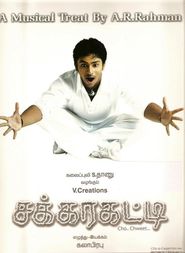
View film →Tamil film debut in Sakkarakatti as Deepali
View film →Appeared in Dulha Mil Gaya alongside Fardeen Khan and Sushmita Sen
View film →Appeared in cult Bollywood hit Pyaar Ka Punchnama
Reprised role in sequel Pyaar Ka Punchnama 2
View film →Iconic Roles
Pyaar Ka Punchnama
One of the three female leads in this cult youth romance; her portrayal of the manipulative yet charming girlfriend helped the film achieve sleeper-hit status among Indian youth.
Pyaar Ka Punchnama 2
Reprised her role in the sequel, cementing her association with the franchise that became a defining pop-culture touchstone for a generation of young Indian audiences.
Dulha Mil Gaya
Played a parallel lead role alongside Shah Rukh Khan in this romantic comedy, marking one of her most high-profile big-banner film appearances.
Ishita Sharma by the Numbers
If you watched every Ishita Sharma film back-to-back, you'd be at it for roughly 16 hours. Most-paired with Nushrat Bharucha — 3 films together.
Filmography
See all 30 credits →

Collaboration Network
The Constellation
Top 4 most-paired collaborators. Bubble size and line thickness reflect how many films they share with Ishita Sharma.
Career Analytics
Genre Breakdown
Language Distribution
Films by Decade
Top Co-Actors
See all →Ishita Sharma has worked most frequently with Luv Ranjan (2 films), Nushrat Bharucha (3 films), Kartik Aaryan (2 films), and Sonalli Sehgal (2 films).


Did You Know?
Ishita Sharma made her acting debut in the 2007 film Dil Dosti Etc, directed by Manish Tiwary.
She played the parallel lead role of Shalini Kapoor opposite Shah Rukh Khan in the 2010 romantic comedy Dulha Mil Gaya.
She appeared in the Tamil film Sakkarakatti (2008), starring alongside debutant Shanthanu Bhagyaraj.
She had a role in the popular comedy film Pyar Ka Punchnama (2011), though her character name is not widely documented.
She reprised her role in the sequel Pyaar Ka Punchnama 2 (2015).
Legacy & Influence
Ishita Sharma's career in Indian cinema, though not extensive, represents a distinct trajectory through the evolving landscape of Hindi and regional films in the late 2000s and early 2010s. She made her debut in the ensemble college drama 'Dil Dosti Etc' (2007), a film noted for its realistic portrayal of urban youth and contemporary relationships, which helped introduce a wave of fresh faces. Her most prominent opportunity came with the Shah Rukh Khan-produced 'Dulha Mil Gaya' (2010), where she played the parallel lead opposite Fardeen Khan. This role placed her in a major mainstream production, albeit one that did not achieve significant commercial or critical success. Sharma's filmography is perhaps most curiously defined by her association with the influential 'Pyar Ka Punchnama' franchise. While her specific role in the first film (2011) is uncredited and minor, the film itself became a cultural touchstone for its humorous and contentious depiction of modern dating dynamics from a male perspective, sparking widespread debate. Her appearance in its sequel further ties her to this impactful series. She also ventured into Tamil cinema with 'Sakkarakatti' (2008). Overall, Ishita Sharma's contribution lies in her presence during a transitional period for young actors in Bollywood, appearing in early experiments with youth-centric narratives and a major franchise that shaped pop-culture conversations about relationships. Her career, while not yielding major stardom, reflects the pathways available to actors navigating between indie-style projects and commercial cinema during that era.