T. Nagarajan
T. Nagarajan is an Indian director, best known for Tamil cinema. T. Nagarajan began their career in 1997. With 30 credits to their name, T. Nagarajan remains one of the most prolific and celebrated talents in the industry. T. Nagarajan is one of the most closely watched talents of their generation, with a rapidly growing body of acclaimed work.
Biography
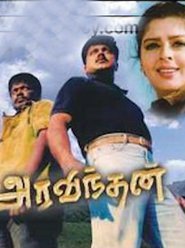
T. Nagarajan is a Tamil film director and writer active in Tamil cinema. He made his directorial debut with Aravindhan (1997), a political thriller based on the 1968 Kilvenmani massacre, starring Sarathkumar and Parthiban, and notable for marking the debut of composer Yuvan Shankar Raja and cinematographer R. Rathnavelu. His second film, Agaram (2007), was an action-drama starring Nandaa and Archana, with Biju Menon as the antagonist. Both films were released on February 16 in their respective years but did not achieve commercial success at the box office.
T. Nagarajan by the Numbers
If you watched every T. Nagarajan film back-to-back, you'd be at it for roughly 4 hours. Most-paired with Yuvan Shankar Raja — 2 films together.
Filmography
See all 30 credits →
Collaboration Network
Career Analytics
Language Distribution
Films by Decade
Top Co-Actors
See all →T. Nagarajan has worked most frequently with Yuvan Shankar Raja (2 films).

Legacy & Influence
T. Nagarajan was a pioneering figure in the early decades of Tamil cinema, primarily known as a director and producer. His career trajectory began in the 1940s, a formative period for the industry. He is most significantly remembered for co-founding the influential production and distribution company, Jupiter Pictures, in 1945 along with his brother, T. V. Sethuraman. This venture was instrumental in shaping the commercial and artistic landscape of Tamil films, producing numerous successful and culturally significant movies. Nagarajan directed several films under the Jupiter banner, often collaborating with major stars of the era like M. G. Ramachandran (MGR) and Sivaji Ganesan. His directorial work, including films such as "Malaikkallan" (1954) starring MGR, helped establish and popularize the archetype of the heroic, socially conscious protagonist—a template that would dominate Tamil cinema for decades. Through Jupiter Pictures, he provided a platform for many talented actors, musicians, and technicians, contributing to the professional ecosystem of the industry. His legacy is that of a foundational industrialist and filmmaker whose business acumen and creative decisions helped stabilize and propel Tamil cinema's growth during its crucial post-independence expansion, leaving a lasting structural and narrative imprint.