C. Sivakumar
C. Sivakumar is an Indian director, best known for Tamil cinema. C. Sivakumar began their career in 1995. With 30 credits to their name, C. Sivakumar remains one of the most prolific and celebrated talents in the industry. An emerging voice in Tamil cinema, C. Sivakumar is already attracting significant attention for their distinctive work.
Biography
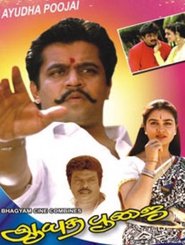
C. Sivakumar was a Tamil film director and screenwriter who worked in the Tamil cinema industry, having trained as an assistant director under K. Bhagyaraj before helming his own films. His directorial debut was Ayudha Poojai (1995), an action drama starring Arjun, Urvashi, and Roja with music by Vidyasagar. His second and final film, Rettai Jadai Vayasu (1997), was a romantic comedy starring Ajith Kumar and Manthra, with music composed by Deva. Sivakumar passed away in August 2018 and was found dead in his apartment near Virugambakkam, Chennai.
C. Sivakumar by the Numbers
If you watched every C. Sivakumar film back-to-back, you'd be at it for roughly 4 hours. Most-paired with Goundamani — 3 films together.
Filmography
See all 30 credits →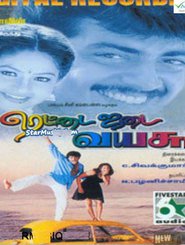
Collaboration Network
The Constellation
Top 2 most-paired collaborators. Bubble size and line thickness reflect how many films they share with C. Sivakumar.
Career Analytics
Language Distribution
Films by Decade
Top Co-Actors
See all →C. Sivakumar has worked most frequently with Goundamani (3 films), and Ajith Kumar (2 films).

Legacy & Influence
C. Sivakumar is a respected figure in the South Indian film industry, primarily known for his work as a cinematographer in Tamil and Malayalam cinema. His career trajectory is defined by a long-standing and fruitful collaboration with acclaimed director Bharathiraja, beginning in the late 1970s. Sivakumar's cinematography was integral to the visual storytelling of Bharathiraja's seminal works, which were pivotal in shifting Tamil cinema away from studio-bound melodramas towards a more grounded, village-centric realism. His camera work on films like '16 Vayathinile' (1977) and 'Kizhakke Pogum Rail' (1978) captured the raw textures of rural landscapes and the nuances of natural light, enhancing the films' authentic emotional core. This partnership helped define a visually distinct and influential era in Tamil filmmaking. Beyond this key collaboration, Sivakumar maintained a steady career, working with other notable directors such as K. Balachander and P. Bharathiraja across several decades. His contribution lies in his ability to craft imagery that served the narrative, whether in stark realistic dramas or more mainstream ventures. While not as frequently discussed as some of his contemporaries, his body of work, particularly from the late 1970s through the 1980s, represents a significant thread in the evolution of cinematic visual language in South India, helping to establish a visual grammar for realism that influenced subsequent generations of cinematographers.