Deenadayal
Deenadayal is an Indian director, best known for Tamil cinema. Deenadayal began their career in 1988. With 30 credits to their name, Deenadayal remains one of the most prolific and celebrated talents in the industry. Deenadayal is one of the most closely watched talents of their generation, with a rapidly growing body of acclaimed work.
Deenadayal by the Numbers
If you watched every Deenadayal film back-to-back, you'd be at it for roughly 7 hours. Most-paired with Ramarajan — 2 films together.
Filmography
See all 30 credits →Collaboration Network
The Constellation
Top 3 most-paired collaborators. Bubble size and line thickness reflect how many films they share with Deenadayal.
Career Analytics
Language Distribution
Films by Decade
Top Co-Actors
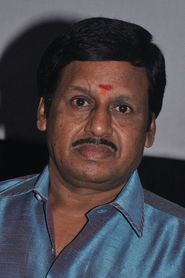
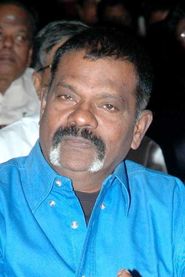
See all →Deenadayal has worked most frequently with Ramarajan (2 films), Vinu Chakravarthy (2 films), and Deva (2 films).

Legacy & Influence
Deenadayal is a name that appears in the annals of Indian cinema, primarily associated with the Tamil film industry. While comprehensive biographical details remain scarce, his contributions are recognized within specific cinematic circles. His career trajectory is most notably marked by his work as a producer during a formative period for regional cinema. He is credited with producing the 1958 Tamil film "Uthama Puthiran," directed by veteran filmmaker T. Prakash Rao and starring the legendary Sivaji Ganesan. This film, an adaptation of the classic novel "The Count of Monte Cristo," is remembered as a significant early dual-role performance for Sivaji Ganesan and is considered a landmark in his illustrious career. By financing and facilitating such a project, Deenadayal played a crucial role in enabling ambitious storytelling and star-vehicles that helped define the commercial and artistic landscape of mid-20th century Tamil cinema. His contribution lies not in a large filmography, but in the strategic support of a major production that showcased the prowess of a leading actor and a skilled director, thereby contributing to the era's cinematic legacy. The film's enduring popularity and its place in the history of Tamil cinema's golden age are, in part, a testament to his role as a producer who backed a project of considerable scale and ambition. His work represents the often-unsung role of producers who provide the essential infrastructure for creative vision, helping to bring narratives to the screen that would go on to influence audiences and filmmakers alike.