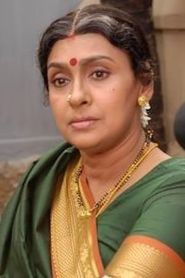
Sujatha
Sujatha is an Indian actor, best known for Tamil cinema. Sujatha began their career in 1983 and has been a prominent figure in the industry for over 43 years. With over 120 credits to their name, Sujatha remains one of the most prolific and celebrated talents in the industry. Sujatha's influence on Tamil cinema is generational — their work continues to define the standard for the industry.
- Born
- Age
- 73
Biography
Sujatha (10 December 1952 – 6 April 2011) was a South Indian actress who appeared in over 300 films across Tamil, Telugu, Malayalam, Kannada, and Hindi cinema, best known for roles requiring emotional restraint and subtlety. She was launched in Tamil cinema by director K. Balachander in 'Aval Oru Thodarkadhai' and won multiple Filmfare Awards South for 'Uravu Solla Oruvan' (1975), 'Annakili' (1976), 'Avargal' (1977), and the Telugu film 'Guppedu Manasu' (1979). She frequently appeared opposite major stars including Kamal Haasan, Rajinikanth, Akkineni Nageswara Rao, and Shobhan Babu, and continued working into the 2000s with films like 'Baba' (2002), where she played Rajinikanth's mother, and 'Attagasam' (2004).
Career Milestones
Film debut
View film →Highest rated: Aval Oru Thodar Kathai (8.4)
View film →50th film
View film →100th film
View film →Iconic Roles
Aval Oru Thodar Kathai
Portrayed the central character, a strong-willed working woman supporting her family.
Avargal
Played a pivotal role in this K. Balachander film about a divorced woman's life.
Annakili
Played the title role in this successful romantic drama.
Defining Moments
Breakthrough Role
Her performance as Kavitha in 'Aval Oru Thodar Kathai' established her as a leading actress in Tamil cinema.
Commercial Success
The film 'Annakili', in which she played the title role, was a major commercial hit.
Critical Acclaim
Her role in K. Balachander's 'Avargal' alongside Kamal Haasan was highly praised for its depth and subtlety.
Sujatha by the Numbers
If you watched every Sujatha film back-to-back, you'd be at it for roughly 10 days and 0h. Most-paired with Ilayaraja — 14 films together.
Filmography
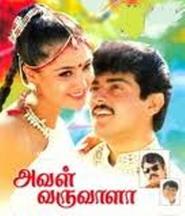
See all 120 credits →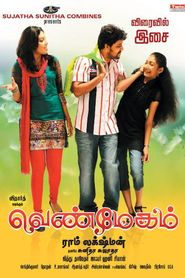



Collaboration Network
The Constellation
Top 10 most-paired collaborators. Bubble size and line thickness reflect how many films they share with Sujatha.
Career Analytics
Language Distribution
Films by Decade
Top Co-Actors
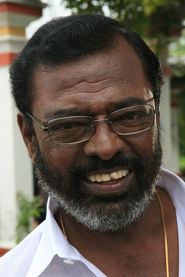
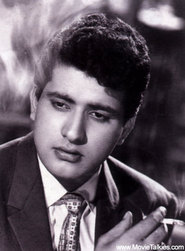
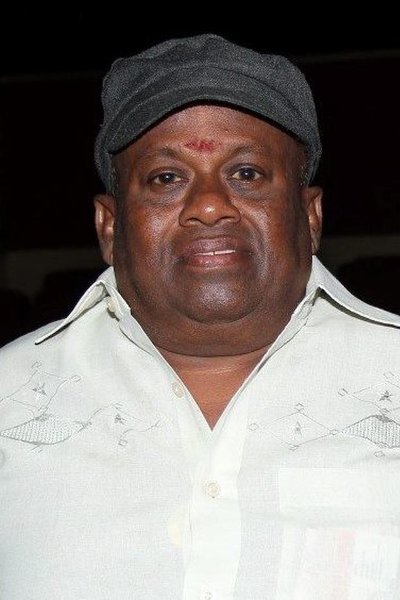
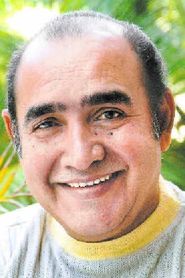
See all →Sujatha has worked most frequently with Manivannan (3 films), K. S. Ravikumar (3 films), Ravi Raja Pinisetty (3 films), P. Vasu (2 films), and Manoj Kumar (2 films).




Did You Know?
Sujatha was introduced to the Tamil film industry by the legendary director K. Balachander.
She was known for her natural and subtle acting style, often portraying strong, independent women.
She acted in films across five major Indian languages: Malayalam, Tamil, Telugu, Kannada, and Hindi.
She was a trained Bharatanatyam dancer.
She was a popular heroine in Tamil cinema during the 1970s and 1980s.
Legacy & Influence
Sujatha, born on 10 December 1952, carved a distinct and enduring legacy in South Indian cinema through her nuanced and understated performances. Introduced by the visionary director K. Balachander, she became a prominent figure in the 1970s and 1980s, a period marked by a shift towards more realistic and female-centric narratives. Her career trajectory is defined by her exceptional ability to portray complex emotions with remarkable restraint and subtlety, a quality that set her apart in an industry often leaning towards melodrama. She excelled in roles that demanded emotional depth and quiet resilience, becoming a favorite of directors who valued naturalistic acting. Sujatha's contribution lies in her embodiment of the modern, thinking woman on screen. In films like K. Balachander's 'Aval Oru Thodar Kathai' (1974), she portrayed Kavitha, a character grappling with societal pressures and personal aspirations, bringing a grounded authenticity that resonated deeply with audiences. Her collaboration with Balachander continued in 'Avargal' (1977), where her performance as Anubama, a divorced woman navigating life's complexities, further showcased her skill in internalized acting. While she delivered notable performances in mainstream ventures like 'Maaveeran' (1986), her true impact was in films that explored psychological and social themes. Her fluency in multiple languages—Malayalam, Tamil, Telugu, Kannada, and Hindi—allowed her to connect with a pan-Indian audience, though she remains most celebrated in Tamil and Malayalam cinema. Sujatha's filmography, though selective in her later years, consistently reflected a commitment to substance over glamour. She paved the way for future actresses by demonstrating that power on screen could emanate from subtlety and emotional truth rather than overt dramatics. Her passing in 2011 marked the loss of an artist whose quiet dignity and professional integrity left an indelible mark on the craft of acting in Indian cinema.