Veena
Veena is an Indian actor, best known for Tamil cinema. Veena began their career in 1980 and has been a prominent figure in the industry for over 46 years. With 30 credits to their name, Veena remains one of the most prolific and celebrated talents in the industry. Spanning 40+ years, Veena's career remains one of the longest and most celebrated in Tamil cinema.
- Born
- Age
- 100
Biography
Veena (born Tajour Sultana, 4 July 1926 – 14 November 2004), also known as Veena Kumari, was a Hindi cinema actress who appeared in over 70 feature films across a career spanning four decades. She is best known for her roles in Chalti Ka Naam Gaadi (1958), Kaagaz Ke Phool (1959), Pakeezah (1972), and Taj Mahal (1963), for which she won the Filmfare Award for Best Supporting Actress. She frequently played strong supporting characters, including royal and authoritative women, most notably Empress Shah Turkhan in Razia Sultan (1983), her final film. Her appearance in Payal Ki Jhankaar (1980) came near the end of her career, before she retired in 1983 after over 41 years in Indian cinema.
Iconic Roles
Taj Mahal
Award-winning supporting role as the Mughal empress Noor Jehan; Veena won the Filmfare Award for Best Supporting Actress for this performance.
Pakeezah
Pivotal supporting role as Nawabjaan, contributing significantly to the film's emotional depth in this celebrated classic.
Humayun
A fiery yet tender warrior princess who challenges and eventually allies with the Mughal emperor in this historical epic.
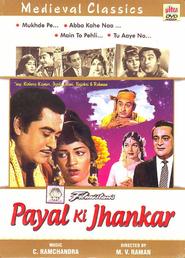
Payal Ki Jhankaar
Title-adjacent role as an international artiste dancer competing in a high-profile dancing contest.
Defining Moments
Supporting role alongside Madhubala, Kishore Kumar, and Ashok Kumar in this classic comedy, demonstrating her versatility beyond serious dramatic roles
One of Hindi cinema's most beloved comedies; her participation in such a landmark ensemble film broadened her screen presence and showed range beyond period dramas
Appearance in Guru Dutt's career-defining masterpiece, one of Indian cinema's most celebrated films, adding gravitas to its ensemble
Being part of a Guru Dutt classic — now considered among the greatest Indian films ever made — gave Veena enduring association with a cinematic landmark
Portrayal of Malka-E-Alam Noor Jehan, the powerful Mughal queen, in a regal and commanding supporting role that earned her the Filmfare Award for Best Supporting Actress
Her most acclaimed performance and the only Filmfare-winning role of her career, cementing her reputation for embodying aristocratic, authoritative women in historical dramas
Role as the mother figure in this family drama, marking her successful transition from leading lady to character actress with dignified matriarchal portrayals
Exemplifies her graceful career evolution into character roles, a transition she navigated with distinction across the 1960s and 1970s
Appearance in the Rajshri Productions family film in a supporting role, extending her career into the early 1980s
One of her final screen appearances, showing her continued relevance across four decades of Hindi cinema
View film →Veena by the Numbers
If you watched every Veena film back-to-back, you'd be at it for roughly 9 hours.
Filmography
See all 30 credits →
Career Analytics
Language Distribution
Films by Decade
Legacy & Influence
Veena is a respected actress whose career in Indian cinema, particularly in the 1980s, is defined by her work in supporting and character roles. While comprehensive biographical details are scarce, her filmography indicates a steady presence in the industry during a vibrant period. Her performance in films like 'Payal Ki Jhankaar' (1980) represents her contribution to the mainstream cinematic output of the era. As an actress, she likely played a part in the narrative fabric of numerous films, helping to flesh out stories and complement lead performances, a crucial but often understated function in filmmaking. Without verified information on major awards or landmark starring roles, her legacy rests on the consistent professionalism and dedication required to sustain a career in the competitive Hindi film industry. Her work remains a part of the collective archive of 1980s cinema, contributing to the period's diverse on-screen representation.