Paruchuri Murali
Paruchuri Murali is an Indian director, best known for Tamil cinema. Paruchuri Murali began their career in 2004. With 30 credits to their name and an average audience rating of 6.6, Paruchuri Murali remains one of the most prolific and celebrated talents in the industry. An emerging voice in Tamil cinema, Paruchuri Murali is already attracting significant attention for their distinctive work.
Biography
Paruchuri Murali is a Telugu film director and screenwriter based in Tollywood (Telugu cinema), known for directing action and drama films. He directed Pedababu (2004), a remake of Pasumpon starring Jagapathi Babu as a village headman, and later helmed Adhinayakudu (2012) and Aatagallu (2018). His work spans multiple genres including action dramas and rural narratives, often collaborating with established Telugu stars. He is associated with the Paruchuri family, a prominent screenwriting dynasty in Telugu cinema.
Career Milestones
Directorial debut with Nee Sneham
Directed family drama Pedababu
View film →Directed action film Andhrudu
Directed Rechipo
Directed Adhinayakudu
Paruchuri Murali by the Numbers
If you watched every Paruchuri Murali film back-to-back, you'd be at it for roughly 4 hours.
Filmography
See all 30 credits →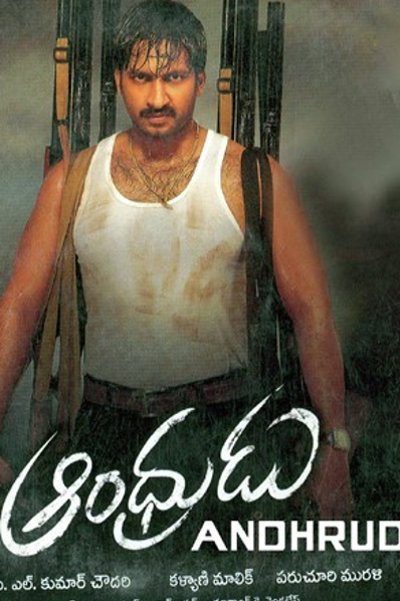
Career Analytics
Language Distribution
Films by Decade
Legacy & Influence
Paruchuri Murali, alongside his brother Paruchuri Venkateswara Rao, forms one of the most influential and prolific writing duos in Telugu cinema history, collectively known as the Paruchuri Brothers. Their career, spanning from the late 1970s into the 2000s, fundamentally reshaped Telugu film narratives, particularly within the socio-political and faction film genres. They are celebrated for crafting powerful, dialogue-driven scripts that resonated deeply with mass audiences, often embedding strong ideological and social commentary. Their writing is characterized by sharp, rhythmic, and hard-hitting dialogue that became a cultural phenomenon, frequently quoted in political and social contexts. They played a pivotal role in the careers of major stars like N.T. Rama Rao and Chiranjeevi, scripting landmark films that defined their on-screen personas and political imagery. Films such as "Khaidi" (1983), "Prathighatana" (1985), "State Rowdy" (1989), and "Gang Leader" (1991) are testaments to their ability to weave compelling stories of rebellion, justice, and societal conflict. Their work often championed the underdog and critiqued systemic corruption, giving a voice to subaltern perspectives and influencing the political consciousness of the era. The Paruchuri Brothers' contribution extends beyond mere entertainment; they elevated screenplay and dialogue writing to a central artistic force in Telugu cinema, inspiring generations of writers to prioritize ideological depth and linguistic power. Their legacy is that of master storytellers who used the mass film medium as a potent tool for social engagement, leaving an indelible mark on the industry's narrative style and thematic ambitions.