Kranthi Kumar
Kranthi Kumar is an Indian director, best known for Tamil cinema. Kranthi Kumar began their career in 1986 and has been a prominent figure in the industry for over 40 years. With 30 credits to their name, Kranthi Kumar remains one of the most prolific and celebrated talents in the industry. Spanning 40+ years, Kranthi Kumar's career remains one of the longest and most celebrated in Tamil cinema.
- Born
- Age
- 84
Biography
Kranthi Kumar (Talasila Kranthi Kumar) was a Telugu film director and producer who directed 19 films and produced 21 films over a career spanning nearly three decades in Telugu cinema. His directorial film Sravanthi (1985) won the National Film Award for Best Feature Film in Telugu, and he received 5 Nandi Awards and 2 Filmfare Awards South. He had a distinctive socially conscious sensibility — his film Swati (1986) depicted an episodic melodrama about a young woman defending herself against predatory males, while Seetharamayya Gari Manavaralu (1991) was selected for the Indian Panorama at the International Film Festival of India. His 2000 film 9 Nelalu was screened in retrospective at the Toronto International Film Festival, reflecting the international reach of his work before his death in Hyderabad on 9 May 2003.
Career Milestones
Began film career as director in Telugu cinema
Directed Sravanthi, winning National Film Award for Best Feature Film in Telugu
Directed Swati (Telugu) and produced Hindi remake starring Meenakshi Sheshadri and Madhuri Dixit
View film →Directed Seetharamayya gari Manavaralu, selected for Indian Panorama at IFFI
Directed Bhale Pellam starring Jagapathi Babu and Meena
View film →Defining Moments
Emotional climax of Sravanthi — the culminating confrontation and resolution between the central characters that earned the film national recognition for its authentic portrayal of rural Telugu life and family relationships
Won the National Film Award for Best Feature Film in Telugu, widely regarded as Kranthi Kumar's magnum opus and the definitive work of his career as a filmmaker
Swati's assertive confrontation scenes — where the bold young protagonist stands up for herself against social pressure, portrayed by Meenakshi Sheshadri in a breakthrough performance
Meenakshi Sheshadri's performance was critically lauded as one of her career-best; the film's depiction of a fiercely independent woman was progressive for its era and remains widely discussed
View film →Seetharamayya's tender bonding scenes with his granddaughter Vijetha — the grandfatherly affection portrayed across generational differences became the emotional core of the film
Selected for the Indian Panorama section of IFFI; the film's warm humanist portrayal of family became one of the most beloved Telugu family dramas, with Sivaji Ganesan's performance celebrated as iconic
The marital conflict and reconciliation arc in Bhale Pellam, where the wife endures a relentless pursuer while the husband must confront trust and commitment — the emotional resolution was praised for its nuance
Jagapathi Babu and Meena's performances anchored this Telugu family drama; the film's treatment of marital loyalty and societal pressure resonated strongly with Telugu audiences
View film →9 Nelalu's portrayal of pregnancy and a woman's nine-month emotional journey — an intimate, realistic narrative rarely attempted in mainstream Telugu cinema at that time
Screened at the Toronto International Film Festival retrospective, marking Kranthi Kumar's continued commitment to socially meaningful cinema late in his career
Kranthi Kumar by the Numbers
If you watched every Kranthi Kumar film back-to-back, you'd be at it for roughly 9 hours.
Filmography
See all 30 credits →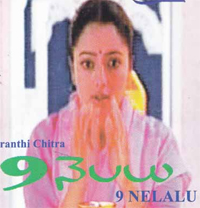
Career Analytics
Language Distribution
Films by Decade
Legacy & Influence
Kranthi Kumar is recognized as a significant director and screenwriter in Telugu cinema, primarily active from the late 1970s through the 1990s. His career trajectory is marked by a successful shift from directing to screenwriting, where he made his most notable contributions. He first gained major attention as the director of the 1980 blockbuster 'Moodu Mulla Bandham', starring Chiranjeevi, which established him as a filmmaker with a strong commercial sensibility. However, his lasting impact stems from his prolific work as a writer. He crafted the screenplays and dialogues for numerous successful films, particularly for actor Chiranjeevi, contributing to the star's mass appeal during a crucial phase of his career. Key films from this collaboration include the action-drama 'Khaidi' (1983), a major commercial hit that solidified Chiranjeevi's standing, and the socially-conscious 'Pasivadi Pranam' (1987). His writing often balanced mainstream entertainment with relatable emotional conflicts and clear moral stances, resonating strongly with the Telugu audience of the time. While not necessarily an avant-garde figure, Kranthi Kumar's understanding of popular narrative and star vehicles made him a reliable and influential architect of commercial Telugu cinema in the 1980s. His work helped define a certain style of mass-oriented storytelling that prioritized clear heroes, dramatic conflict, and dialogue that connected with the common viewer. His later career included directing and writing for other stars, but his legacy remains tied to his foundational screenwriting contributions during a pivotal era for Telugu film's pan-regional expansion.