Nupur Asthana
Nupur Asthana is an Indian director, best known for Tamil cinema. Nupur Asthana began their career in 2011. With 30 credits to their name, Nupur Asthana remains one of the most prolific and celebrated talents in the industry. An emerging voice in Tamil cinema, Nupur Asthana is already attracting significant attention for their distinctive work.
Biography
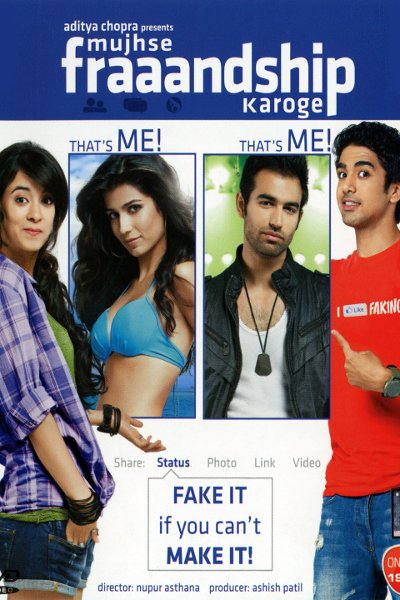
Nupur Asthana is an Indian film and television director based in Mumbai, known for her work in Hindi cinema, who began her career as Chief Assistant Director under filmmaker Ketan Mehta before creating the cult teen television series Hip Hip Hurray (1998) on Zee TV. She made her feature film debut with Mujhse Fraaandship Karoge (2011), a Y-Films production starring Saqib Saleem and Saba Azad, earning a Most Promising Debut Director nomination at the 18th Star Screen Awards. Her second film, Bewakoofiyaan (2014), a Yash Raj Films production starring Ayushmann Khurrana and Sonam Kapoor, tackled relationship and economic pressures in a slice-of-life format. She has since directed LGBTQ+ web series Romil and Jugal on ALTBalaji and Season 2 of Four More Shots Please! (2020) on Amazon Prime Video, establishing a consistent focus on contemporary urban Indian relationships.
Career Milestones
Directorial debut with cult teen TV series Hip Hip Hurray (80 episodes) on Zee TV
Feature film directorial debut with youth romantic comedy for Y-Films (Yash Raj Films' youth banner)
View film →Nominated for Most Promising Debut Director at Star Screen Awards
View film →Directed mainstream Yash Raj Films production with A-list cast (Sonam Kapoor, Ayushmann Khurrana, Rishi Kapoor)
View film →Defining Moments
The Facebook identity-swap reveal scene where both leads discover their real-world personas don't match their online profiles, confronting the gap between digital and real selves
Widely cited as one of the first Bollywood films to use social media as a central plot device; the reveal scene crystallized the film's central theme and was praised for its freshness by critics
View film →Nupur Asthana's debut feature direction earning her a Most Promising Debut Director nomination at the 18th Star Screen Awards
Marked her transition from television (Hip Hip Hurray, Mahi Way) to feature films, establishing her as a voice for youth-oriented cinema
View film →The climactic confrontation between Ayushmann Khurrana's character and Rishi Kapoor's overprotective father, where the film's class and financial anxiety tensions come to a head
Critics singled out the father-daughter and father-boyfriend dynamic as the film's emotional core, with Rishi Kapoor's performance in these scenes receiving particular praise
View film →Nupur Asthana by the Numbers
If you watched every Nupur Asthana film back-to-back, you'd be at it for roughly 4 hours. Most-paired with Sonam Kapoor — 2 films together.
Filmography
See all 30 credits →
Collaboration Network
The Constellation
Top 2 most-paired collaborators. Bubble size and line thickness reflect how many films they share with Nupur Asthana.
Career Analytics
Language Distribution
Films by Decade
Top Co-Actors
See all →Nupur Asthana has worked most frequently with Sonam Kapoor (2 films), and Raghu Dixit (2 films).


Legacy & Influence
Nupur Asthana is a significant figure in contemporary Indian cinema and television, primarily recognized as a director and writer who has shaped youth-oriented and female-centric narratives. Her career trajectory began in television, where she directed the popular and influential series 'The Great Indian Love Story' and 'Mahi Way'. These shows were notable for their fresh, relatable portrayal of urban Indian youth, relationships, and the complexities of modern life, breaking away from traditional soap opera formulas. Her transition to films was marked by 'Mujhse Fraaandship Karoge' (2011), a pioneering social media-age romantic comedy that authentically captured the language and dynamics of online relationships among young Indians. The film's success established her as a filmmaker attuned to the digital generation. She further directed 'Bewakoofiyaan' (2014), a film examining employment anxieties and relationships in urban India. A major contribution is her work on the Amazon Prime series 'Made in Heaven' (2019), where she directed key episodes. This series, known for its critical look at societal hypocrisy, lavish weddings, and complex characters, significantly impacted Indian web series storytelling. Asthana's consistent contribution lies in crafting narratives that are conversational, character-driven, and often foreground the perspectives and agency of young women. Her style blends humor with substantive social observation, making her work both accessible and thought-provoking. By focusing on contemporary urban experiences and leveraging new platforms like streaming services, she has helped expand the scope and audience for Indian content beyond conventional cinema.