
Sharman Joshi
Sharman Joshi is an Indian actor, best known for Tamil cinema. Sharman Joshi began their career in 2001 and has been a prominent figure in the industry for over 25 years. With over 60 credits to their name, Sharman Joshi remains one of the most prolific and celebrated talents in the industry. Spanning 20+ years, Sharman Joshi's career remains one of the longest and most celebrated in Tamil cinema.
- Born
- Age
- 47
Biography
Sharman Joshi is a Hindi cinema actor born on April 28, 1979, in Nagpur, belonging to a theatrical Gujarati family, best known for his role as Raju Rastogi in Rajkumar Hirani's blockbuster 3 Idiots (2009) alongside Aamir Khan and R. Madhavan. He won the IIFA Award for Best Supporting Actor for 3 Idiots and earned critical recognition for his performances in Rang De Basanti (2006) and Life in a Metro (2007). Joshi has demonstrated range across comedy in Golmaal: Fun Unlimited (2006) and Dhol (2007) and emotional drama in Ferrari Ki Sawaari (2012), where he played a struggling father-son story. He is the son-in-law of veteran actor Prem Chopra, having married Prerana Chopra in 2000.
Career Milestones
Film debut in supporting role
Breakthrough role in Style
View film →Critical and commercial success as rebellious college student
View film →IIFA Award for Best Supporting Actor as Raju Rastogi
View film →Box office success and Ferrari Ki Sawaari
View film →Iconic Roles
3 Idiots
A struggling engineering student from a poor family, caught between his dreams and family pressures. Sharman won the IIFA Award for Best Supporting Actor for this emotionally resonant role in one of Bollywood's highest-grossing films.
Rang De Basanti
A carefree college student who becomes radicalized after the death of a friend. Sharman brought warmth and humour to this ensemble role in the critically acclaimed political drama.
Golmaal: Fun Unlimited
An innocent, soft-spoken student with a stammer who gets entangled in comic misadventures. The role became iconic for Sharman's impeccable comedy timing and endearing portrayal.
Ferrari Ki Sawaari
A widowed, middle-class Parsi head clerk in Mumbai raising his son alone, who goes to extraordinary lengths to fulfil his child's cricket dreams. A deeply earnest, lead performance showcasing Sharman's dramatic range.
Life in a Metro
A conflicted call-centre employee navigating love and urban loneliness. Sharman delivered a nuanced performance in this surprise box-office hit ensemble drama.
Defining Moments
Sukhi's transformation from carefree college student to a young man radicalized by grief after DJ's death — his shift from comic relief to tragic fury tracks the film's emotional turn
Demonstrated Sharman's ability to carry dramatic weight in an ensemble; the film became a cultural landmark and his performance was part of its enduring impact
View film →Gopal's slapstick misadventures — his bumbling, fearful character anchors the comedy of the Golmaal franchise and set the template for his comic persona across multiple installments
Established Sharman as a reliable comic lead in mainstream Bollywood, launching a franchise association that persisted for years
View film →Raju's attempted suicide and coma awakening — Raju jumps from the hostel window after the dean threatens to expel Rancho, and his emotional recovery scene where he wakes from a coma and reunites with his friends is one of Bollywood's most memorable dramatic turns
Showcased Sharman's dramatic range beyond comedy; the coma-awakening sequence became one of the most emotionally discussed scenes from the film, earning him the IIFA Award for Best Supporting Actor
View film →The drunk classroom scene where Raju makes motor sound effects and stumbles through an engineering lecture — a comedic highlight that defined the trio's chemistry
One of the most quoted and re-shared comedy sequences from the film, cementing Sharman as the comic anchor of the three leads
View film →Raju's job interview scene — after recovering from his coma, Raju attends a corporate interview still in a wheelchair and answers every question with radical honesty, rejecting the pressure-driven system the film critiques
Widely cited as one of the most inspirational scenes in modern Bollywood; encapsulates the film's philosophy and Sharman's ability to deliver both humor and heart simultaneously
View film →Sharman Joshi by the Numbers
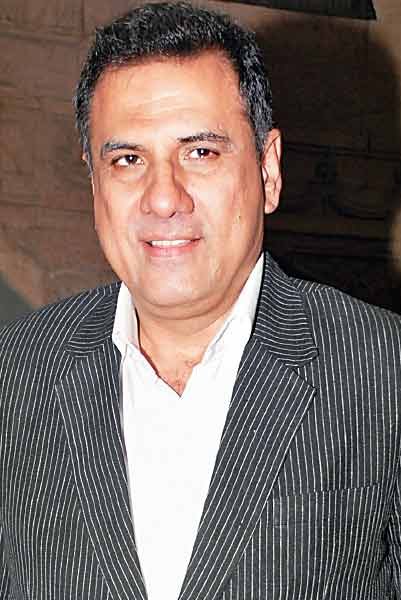
If you watched every Sharman Joshi film back-to-back, you'd be at it for roughly 3 days and 5h. Most-paired with Boman Irani — 4 films together.
Filmography
See all 60 credits →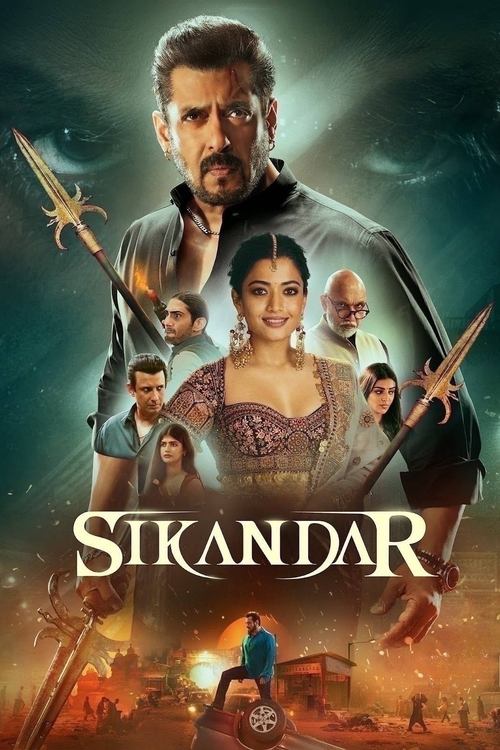

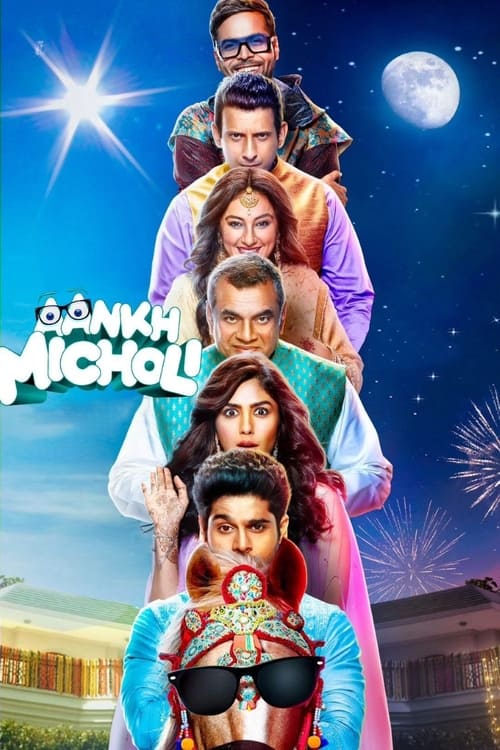


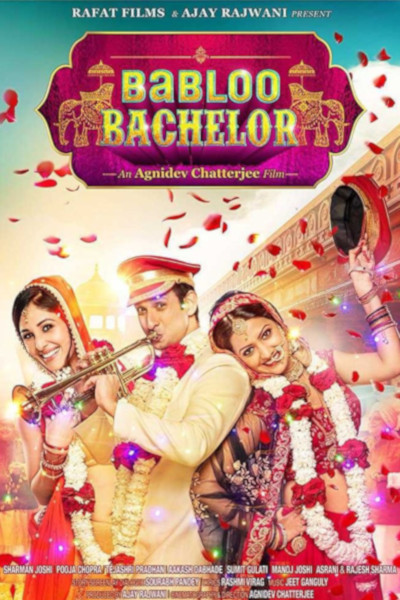

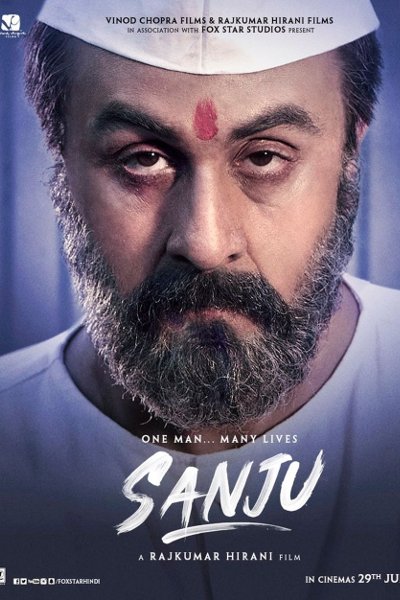
Collaboration Network
The Constellation
Top 10 most-paired collaborators. Bubble size and line thickness reflect how many films they share with Sharman Joshi.
Career Analytics
Genre Breakdown
Language Distribution
Films by Decade
Top Co-Actors
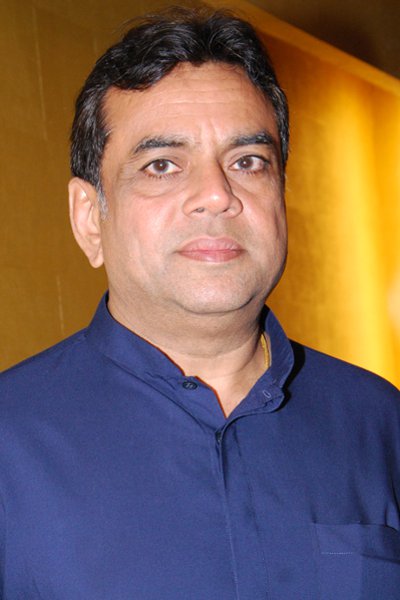
See all →Sharman Joshi has worked most frequently with Vishal Pandya (2 films), N. Chandra (2 films), Rajkumar Hirani (2 films), Boman Irani (4 films), and Paresh Rawal (4 films).






Did You Know?
Sharman Joshi is the son of Gujarati theatre director Arvind Joshi and producer Sarita Joshi.
He is married to actress Prerna Chopra, and they have three children.
Before his film debut, he performed in numerous stage plays, including those with the theatre group 'Aavishkar'.
He won the Filmfare Best Supporting Actor Award for his role in '3 Idiots' (2009).
He is a trained Kathak dancer.
Signature Dialogues
Dono taange tudawa kar apne pairo par khada hona sikha hai sir, badi mushkil se aaya hai yeh attitude, nahi hoga sir. Aap apni naukri rakh lijiye, main apna attitude rakh leta hoon.
Raju Rastogi·3 Idiots
Kisi bhi ladai mein haarta woh nahi joh girta hai ... balki woh joh girke uthta nahi hai
Unknown·Hate Story 3
Himmat tab mat dikhao jab aasaan ho
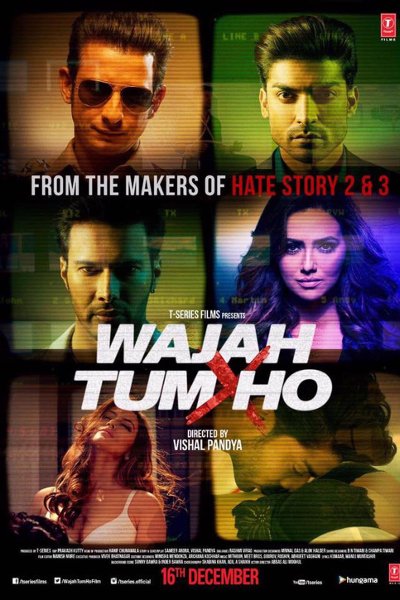
Unknown·Wajah Tum Ho
Legacy & Influence
Sharman Joshi has carved a distinct niche in Indian cinema as a versatile and relatable character actor, celebrated for his impeccable comic timing and earnest performances. Emerging from a strong theatre background in multiple languages, he transitioned to Hindi films with a debut in 'Godmother' (1999). His early career was marked by roles in comedies like 'Style' (2001) and 'Xcuse Me' (2003), where he honed his skills in light-hearted genres. However, his legacy is firmly anchored in his contributions to several landmark films that resonated deeply with audiences. His portrayal of Raju Rastogi in the cultural phenomenon '3 Idiots' (2009) was a career-defining moment; his character's journey from fear to self-belief added crucial emotional depth to the film's critique of educational pressure, making him a household name. Earlier, his role as Sukhi in the patriotic drama 'Rang De Basanti' (2006) showcased his ability to handle more intense, dramatic material within an ensemble cast, contributing to the film's powerful social impact. Joshi has consistently chosen roles that, while not always leading, are integral to the narrative fabric of successful films, as seen in 'Ferrari Ki Sawaari' (2012) and ensemble projects like 'Mission Mangal' (2019). His career trajectory reflects a deliberate shift from purely comic roles to more layered characters, demonstrating a range that is often understated. By delivering memorable performances in some of Hindi cinema's most influential films of the 2000s and 2010s, Sharman Joshi's contribution lies in his reliable ability to enhance stories with authenticity and warmth, securing his place as a beloved and respected figure in the industry.