Ritesh Batra
Ritesh Batra is an Indian director, best known for Tamil cinema. Ritesh Batra began their career in 2013 and has been a prominent figure in the industry for over 13 years. With 30 credits to their name and an average audience rating of 7.5, Ritesh Batra remains one of the most prolific and celebrated talents in the industry. Ritesh Batra is one of the most closely watched talents of their generation, with a rapidly growing body of acclaimed work.
- Born
- Age
- 47
Biography
Ritesh Batra is a Mumbai-born Indian film director working in Hindi cinema, best known for intimate, quietly observed stories about human connection set against urban Indian backdrops. His debut feature The Lunchbox (2013) won the Rail d'Or at Cannes Critics' Week and earned a BAFTA nomination for Best Film Not in the English Language, becoming the highest-grossing foreign-language film in North America, Europe, and Australia in 2014. His films characteristically use unconventional communication — handwritten letters in The Lunchbox, a stranger posing as a fiancée in Photograph (2019) — as devices to explore loneliness and longing among ordinary people in Mumbai. Between his two Hindi-language features, he directed two English-language literary adaptations, The Sense of an Ending (2017) and Our Souls at Night (2017), establishing himself as one of the few Indian directors to work fluidly across international co-productions.
Career Milestones
Short film Café Regular, Cairo wins FIPRESCI prize and screens at 40+ international festivals
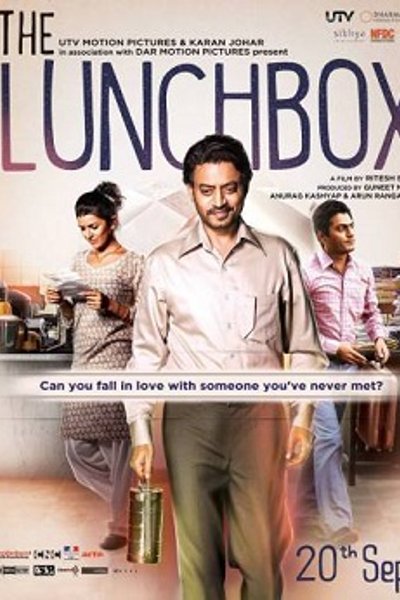
Feature debut The Lunchbox premieres at Cannes and wins the Rail d'Or (Grand Golden Rail)
View film →BAFTA nomination for Best Film Not in the English Language
View film →Directed Hollywood film with Robert Redford and Jane Fonda for Netflix
Photograph premieres at Sundance Film Festival
View film →Defining Moments
The wrong lunchbox delivery — Ila's meal reaches Saajan instead of her husband, sparking a letter exchange between two lonely strangers
The inciting premise of the film, grounded in the real dabbawala system's near-mythic accuracy. Widely cited as one of Indian cinema's most original meet-cute setups — two people who never meet yet fall in love through food and letters.
View film →Ila's final letter revealing she is leaving for Bhutan — and Saajan's realization he has waited too long
A quietly devastating ending that subverts Bollywood convention by refusing a reunion. Frequently discussed as what gave the film its emotional staying power and critical legitimacy on the international festival circuit.
View film →Rafi's opening pitch at the Gateway of India — 'the wind in your hair, the light on your face, won't come back like today'
Establishes the film's central metaphor: a photograph as both a lie and a longing. Critics repeatedly cite this as the scene that sets Batra's meditative tone and announces the film's thematic preoccupation with memory and impermanence.
View film →Miloni pretending to be Rafi's fiancée for his grandmother — a fiction that slowly becomes emotional truth for both
The emotional core of the film. Cited as a masterclass in restrained performance and Batra's signature approach: intimacy built through proximity and silence rather than declaration.
View film →Miloni framed behind iron bars on the ferry — a wordless visual of her entrapment in class and expectation
Batra himself has described searching for this specific composition to convey her inner state without dialogue. Widely noted by critics as an example of his camera-as-character approach and visual economy.
View film →Ritesh Batra by the Numbers
If you watched every Ritesh Batra film back-to-back, you'd be at it for roughly 4 hours. Most-paired with Nawazuddin Siddiqui — 2 films together.
Filmography
See all 30 credits →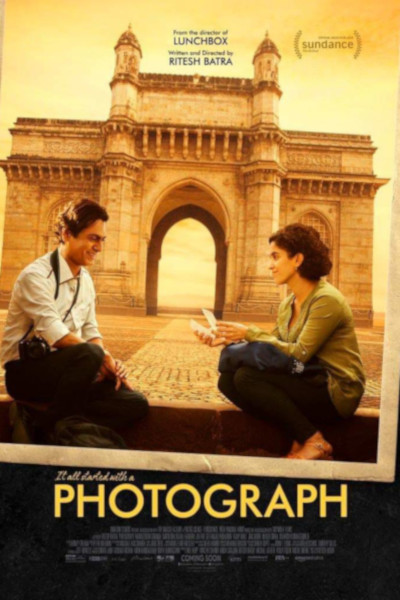
Collaboration Network
Career Analytics
Language Distribution
Films by Decade
Top Co-Actors
See all →Ritesh Batra has worked most frequently with Nawazuddin Siddiqui (2 films).

Did You Know?
Ritesh Batra is an Indian film director and screenwriter best known for his debut feature 'The Lunchbox'.
He was born in Mumbai, India, and studied at the University of Notre Dame and the New York Film Academy.
His film 'The Lunchbox' premiered at the 2013 Cannes Film Festival and won the Critics' Week Viewers Choice Award.
The film 'The Lunchbox' was nominated for a BAFTA Award for Best Film Not in the English Language.
He directed the film 'Photograph' (2019), starring Nawazuddin Siddiqui and Sanya Malhotra.
Legacy & Influence
Ritesh Batra emerged as a significant voice in 21st-century Indian cinema by directing films that masterfully explore intimacy, loneliness, and human connection through a quiet, observational lens. His debut feature, 'The Lunchbox' (2013), became a global phenomenon, achieving critical and commercial success at international festivals like Cannes and earning a BAFTA nomination for Best Film Not in the English Language. This film redefined the narrative scope of Indian cinema for global audiences, moving beyond the dominant spectacles of Bollywood and parallel cinema to present a nuanced, Mumbai-set story told with subtlety and emotional depth. Its success demonstrated the international market for Indian stories told in a minimalist, character-driven style. Batra followed this with 'The Sense of an Ending' (2017), an adaptation of Julian Barnes's novel, further establishing his skill in translating complex interior lives to the screen. His later work, including 'Photograph' (2019), continued his thematic preoccupation with fleeting relationships and urban solitude. Batra's primary contribution lies in forging a distinct cinematic language—often compared to the works of Satyajit Ray in its humanism and restraint—that has expanded the perception of Indian filmmaking worldwide. He paved a path for a new generation of Indian directors aiming for global arthouse recognition, proving that small-scale, emotionally resonant stories from India could achieve universal appeal and critical acclaim on the world stage.