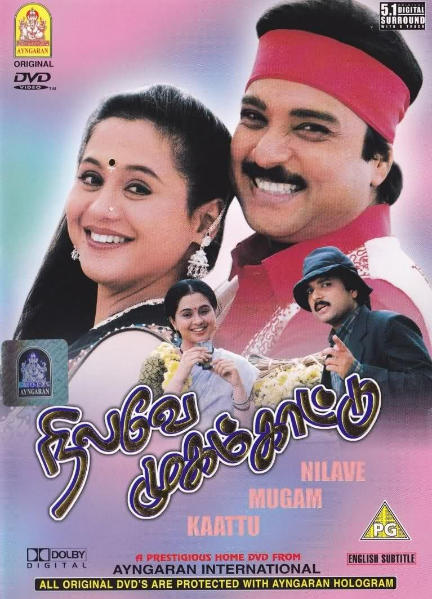
Nilave Mugam Kaattu(1999)
Nilave Mugam Kaattu is a 1999 Indian Tamil-language romantic drama film directed by Kalanjiyam. The lead cast includes Karthik, Ramki, and Devayani. The story follows a blind flower seller who falls in love with a man's voice, but fails to recognize him after her sight is restored. The film explores themes of identity, deception, and the nature of true love. It received moderate reviews and is remembered for its emotional plot and performances. The movie was released in 1999 and is available on YouTube.
Nilave Mugam Kaattu (1999) OTT release date is not officially announced yet — GudVibe tracks its streaming availability daily.
Where to watch:Quick Facts
- Theatrical Release
- 30 April 1999
- Director
- Kalanjiyam
- Language
- Tamil
- Runtime
- 2h 40m
- Rating
- 6.8/10
Storyline
A blind flower seller named Priya falls in love with a kind man named Raja, who hides his true identity. After a successful surgery restores her sight, she meets a handsome stranger and falls for him again. She does not realize the stranger is actually Raja, who has changed his appearance. Now Raja must win her love without revealing his secret.
“Love sees beyond the eyes”
Film Details
Parental Guide
Vibe & Tags
Cast & Crew




Reunion Meter
Frequent partnerships reunited for Nilave Mugam Kaattu
Cast reunions in this film: Karthik & Ilayaraja (45 films together), Ramki & Ilayaraja (15 films together), Devayani & Ilayaraja (9 films together), Devayani & Kalanjiyam (3 films together), Kalanjiyam & Ilayaraja (3 films together), and Devayani & Karthik (2 films together).
Trivia
- The film's director Mu Kalanjiyam was also a noted Tamil novelist and short story writer.
- This was one of the few films where actor Prashanth played a dual role, portraying both Prakash and Murthy.
- The movie's title 'Nilavey Mugam Kaattu' translates to 'Moon, Show Your Face', which is a line from a classic Tamil song.
- Actress Rambha, who played the female lead, was a popular star in Tamil and Telugu films during the late 1990s.
- The film's music was composed by Sirpy, a frequent collaborator with director Mu Kalanjiyam.
- A key plot point involves the lead character moving to America, reflecting a common aspiration in Tamil cinema of that era.
- The movie did not perform well commercially, which contributed to it being less remembered compared to other Prashanth films from that period.