Ramya
Ramya is an Indian actor, best known for Tamil cinema. Ramya began their career in 1997. With 30 credits to their name, Ramya remains one of the most prolific and celebrated talents in the industry. Spanning 20+ years, Ramya's career remains one of the longest and most celebrated in Tamil cinema.
Defining Moments
Madhubala's transformation arc — the modern urban woman tamed by tradition in a comic inversion of Shakespeare's The Taming of the Shrew
Showcased her crossover range in Bollywood alongside Govinda. The film was a commercial hit and demonstrated her ability to hold her own in Hindi mainstream comedy, broadening her pan-India appeal.
View film →Neelambari's vengeful antagonist arc — her final confrontation and death scene opposite Rajinikanth
Widely considered one of Tamil cinema's greatest villain performances. She won the Filmfare Award for Best Actress (Tamil) and the Tamil Nadu State Film Award. Critics noted she was 'vicious to her dying breath' and overshadowed even the superstar Rajinikanth in several scenes.
Sivagami lifts baby Mahendra Baahubali above water and sacrifices herself — the iconic closing scene of Baahubali: The Beginning
Became one of Indian cinema's most memorable images. Her portrayal of the fierce yet maternal Rajamata Sivagami defined the Baahubali franchise and earned her the Filmfare Award for Best Supporting Actress (Telugu). The raised-arm pose became a cultural symbol.
Sivagami's grand court entry and declaration of Baahubali as heir — commanding the entire Mahishmati court with regal authority
Established Sivagami as the most powerful presence in the film. Widely cited as one of the best 'queen entries' in Indian cinema, cementing Ramya Krishnan's status as an actress who could command the screen in a male-dominated epic.
Sivagami's death scene — realizing Kattappa's deception and dying after placing the infant Mahendra Baahubali in safety
Emotionally devastating and critically praised performance. Her final moments as Sivagami — grief, betrayal, and maternal love combined — are widely discussed as the emotional peak of the franchise.
Ramya by the Numbers
If you watched every Ramya film back-to-back, you'd be at it for roughly 14 hours. Most-paired with Ramya Krishnan — 2 films together.
Filmography
See all 30 credits →
Collaboration Network
The Constellation
Top 2 most-paired collaborators. Bubble size and line thickness reflect how many films they share with Ramya.
Career Analytics
Language Distribution
Films by Decade
Top Co-Actors
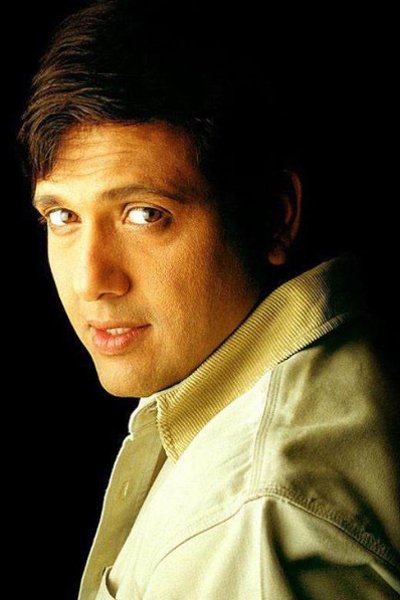
See all →Ramya has worked most frequently with Ramya Krishnan (2 films), and Govinda (2 films).

Legacy & Influence
Ramya is an actress whose work in Tamil and Hindi cinema during the 1990s and 2000s represents a specific trajectory within the supporting cast ecosystem of Indian films. Her filmography, including roles in 'Banarasi Babu' (1997) and 'Loha' (1997), places her within the commercial film industry of that era, a period marked by distinct genre conventions and narrative styles. While specific details of her roles and career milestones are not widely documented in mainstream film historiography, her presence in these projects contributes to the broader tapestry of performers who populated the cinematic landscape. The appearance in 'Mathiya Chennai' (2009) indicates a career span bridging different decades, reflecting the persistence and adaptability required of many character artists. Her contribution, therefore, lies in the collective effort of countless supporting actors who complete the ensemble of a film, providing depth to narratives and enabling the storytelling process. Without verified claims of major awards or pioneering roles, her legacy is one of professional participation in the industry, embodying the work of numerous artists whose individual names may not be prominent but whose cumulative presence is essential to the filmmaking process. This narrative acknowledges the reality of many careers in cinema that are built on steady work rather than stardom, yet remain a fundamental part of the industry's operational fabric.