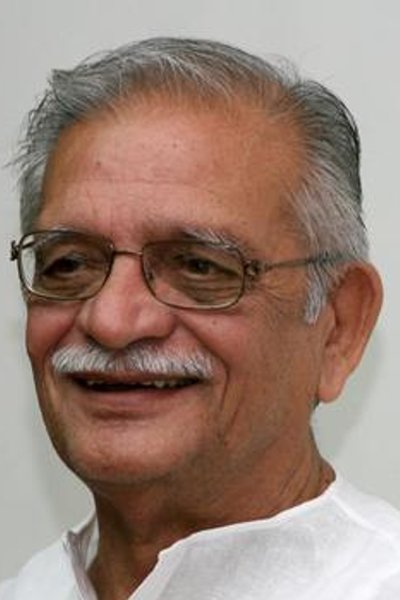
Gulzar
Gulzar is an Indian director, best known for Tamil cinema. Gulzar began their career in 1979 and has been a prominent figure in the industry for over 47 years. With 30 credits to their name and an average audience rating of 6.6, Gulzar remains one of the most prolific and celebrated talents in the industry. Spanning 40+ years, Gulzar's career remains one of the longest and most celebrated in Tamil cinema.
- Born
- Age
- 91

Biography
Sampooran Singh Kalra known popularly by his pen name Gulzar, is an Indian poet, lyricist and film director. Born in Jhelum District in British India, his family moved to India after partition. He started his career with music director S.D. Burman (lovingly known as Burman Dada) as a lyricist in the 1963 film Bandini and worked with many music directors including R. D. Burman, Salil Chowdhury, Vishal Bhardwaj and A. R. Rahman. He directed films such as Aandhi and Mausam and TV series Mirza Ghalib during the 1970s and 1980s. He also directed Kirdaar in 1993. Gulzar also wrote poetry, dialogues and scripts. He was awarded Padma Bhushan, the third-highest civilian award in India, the Sahitya Akademi Award and the Dadasaheb Phalke Award — the highest award in Indian cinema. He has won several Indian National Film Awards, 20 Filmfare Awards, one Academy Award and one Grammy Award.
Career Milestones
Film debut
View film →Highest rated: Ijaazat (8.3)
View film →Defining Moments
First Film as Lyricist
Wrote lyrics for the film 'Bandini', marking his debut as a film lyricist.
Directorial Debut
Directed his first film 'Mere Apne', establishing himself as a filmmaker.
Sahitya Akademi Award
Received the Sahitya Akademi Award for his poetry collection 'Dhuan'.
Padma Bhushan
Awarded the Padma Bhushan, India's third-highest civilian award.
Academy Award Win
Won the Academy Award for Best Original Song for 'Jai Ho' from 'Slumdog Millionaire'.
Gulzar by the Numbers
If you watched every Gulzar film back-to-back, you'd be at it for roughly 23 hours. Most-paired with Tabu — 2 films together.
Filmography
See all 30 credits →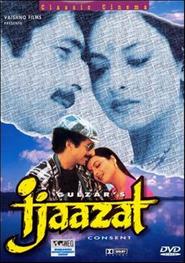
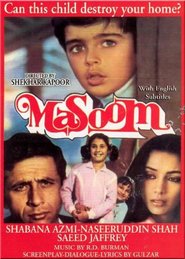
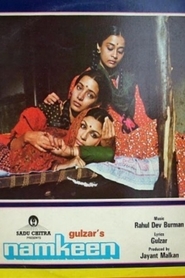
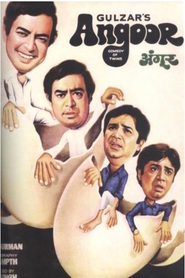
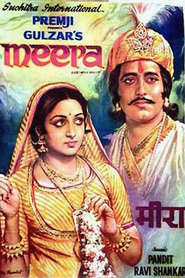
Collaboration Network
The Constellation
Top 5 most-paired collaborators. Bubble size and line thickness reflect how many films they share with Gulzar.
Career Analytics
Language Distribution
Films by Decade
Top Co-Actors
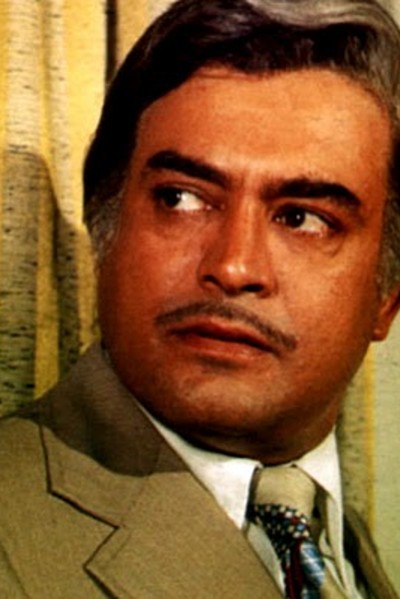
See all →Gulzar has worked most frequently with Tabu (2 films), Hema Malini (2 films), Vinod Khanna (2 films), Sanjeev Kumar (2 films), and Dina Pathak (2 films).


Did You Know?
His pen name 'Gulzar' was suggested by film director Bimal Roy.
He started his career as a lyricist with S.D. Burman for the film 'Bandini' (1963).
He is known for his unique style of blending Urdu and Hindi, often called 'Hindustani', in his poetry and lyrics.
He won the Academy Award for Best Original Song for 'Jai Ho' from 'Slumdog Millionaire' (2008).
He has collaborated extensively with music directors like R.D. Burman, A.R. Rahman, and Vishal Bhardwaj.
Legacy & Influence
Gulzar's contribution to Indian cinema is a profound and multifaceted legacy spanning over five decades, primarily as a lyricist and director who redefined poetic expression in popular film. His career trajectory began under the mentorship of music director S.D. Burman, with whom he collaborated on classics like 'Bandini' (1963), establishing his signature style—a blend of simple, evocative Hindustani often infused with Urdu, Punjabi, and rustic dialects, making profound themes accessible. As a lyricist, his partnerships with composers like R.D. Burman, A.R. Rahman, and Vishal Bhardwaj produced an unparalleled body of work, from the playful 'Kajra Re' to the philosophically rich 'Tere Bina' and the haunting 'Chhaiyya Chhaiyya'. His lyrics are celebrated for their literary quality, emotional depth, and ability to capture nuanced human experiences, elevating film music to poetry. As a director and screenwriter, Gulzar crafted a distinct oeuvre of films that were critically acclaimed for their humanism, social consciousness, and narrative sophistication. Works like 'Aandhi', 'Mausam', 'Ijaazat', and 'Maachis' addressed complex themes such as politics, partition, relationships, and conflict with subtlety and sensitivity, often focusing on marginalized voices and moral ambiguities. His directorial style is noted for its understated realism, lyrical storytelling, and strong character development. Beyond film, his contributions to literature through poetry and short stories have bridged the gap between popular cinema and serious literary art. Gulzar's influence is immense: he mentored and inspired generations of writers and filmmakers, and his work continues to be a benchmark for lyrical and narrative excellence, ensuring his place as a cultural icon who shaped the aesthetic and emotional landscape of Indian cinema.