Vanraj Bhatia
Vanraj Bhatia is an Indian original music composer, best known for Tamil cinema. Vanraj Bhatia began their career in 1981. With 30 credits to their name, Vanraj Bhatia remains one of the most prolific and celebrated talents in the industry. Spanning 40+ years, Vanraj Bhatia's career remains one of the longest and most celebrated in Tamil cinema.
Career Milestones
Film debut
View film →Highest rated: Kalyug (7.6)
View film →Defining Moments
Background score for 'Bhumika'
Composed the acclaimed background music for Shyam Benegal's film, establishing his reputation in parallel cinema.
National Film Award for 'Tamas'
Won the National Film Award for Best Music Direction for Govind Nihalani's television film 'Tamas'.
'Mile Sur Mera Tumhara'
Composed the music for the iconic national integration song, which became a cultural phenomenon.
Padma Shri Award
Was honored with the Padma Shri, India's fourth-highest civilian award, for his contributions to music.
Vanraj Bhatia by the Numbers
If you watched every Vanraj Bhatia film back-to-back, you'd be at it for roughly 14 hours. Most-paired with Om Puri — 3 films together.
Filmography
See all 30 credits →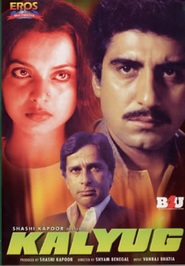
Collaboration Network
The Constellation
Top 5 most-paired collaborators. Bubble size and line thickness reflect how many films they share with Vanraj Bhatia.
Career Analytics
Genre Breakdown
Language Distribution
Films by Decade
Top Co-Actors
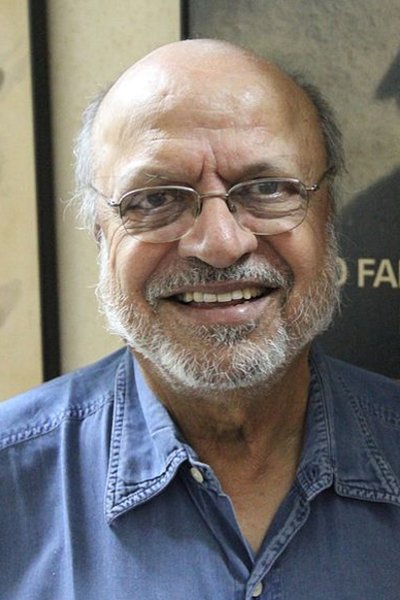
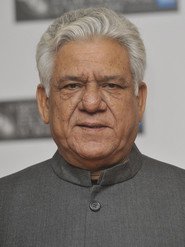
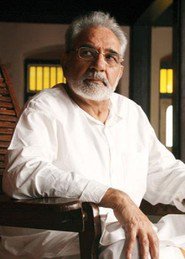
See all →Vanraj Bhatia has worked most frequently with Shyam Benegal (2 films), Om Puri (3 films), Kulbhushan Kharbanda (3 films), Amrish Puri (2 films), and Ila Arun (2 films).

Did You Know?
Vanraj Bhatia was a pioneering Indian composer known for his work in parallel cinema.
He was the first Indian to receive a formal Western classical music education at the Royal Academy of Music, London.
He composed the iconic background score for Shyam Benegal's film 'Bhumika' (1977).
He won the National Film Award for Best Music Direction for the film 'Tamas' (1988).
He composed the famous signature tune for the Indian television series 'Yeh Jo Hai Zindagi'.
Legacy & Influence
Vanraj Bhatia was a pioneering composer whose work fundamentally shaped the sound of Indian art-house and parallel cinema. A classically trained musician who studied under legends like Nadia Boulanger in Paris, he brought a sophisticated, modernist sensibility to Indian film scoring, moving beyond traditional orchestration and popular song conventions. His most significant and enduring contribution was his long-standing collaboration with director Shyam Benegal, beginning with 'Ankur' (1974). For Benegal's seminal films, including 'Nishant' (1975), 'Manthan' (1976), 'Bhumika' (1977), and 'Junoon' (1978), Bhatia created scores that were deeply integrated with the narrative's mood and setting. His music for 'Manthan', based on the dairy cooperative movement, is particularly celebrated for its evocative use of folk-inspired motifs and choral work. He also composed memorable scores for other notable filmmakers like Kumar Shahani ('Maya Darpan', 1972) and Aparna Sen ('36 Chowringhee Lane', 1981). Bhatia's work in television, especially the iconic theme for 'Tamas' (1988), further demonstrated his ability to capture profound historical and emotional gravity through music. His career trajectory shows a consistent commitment to serious, content-driven cinema, where his compositions acted as a powerful narrative layer rather than mere interludes. By blending Western classical techniques with Indian tonalities and often employing minimalistic or avant-garde approaches, he expanded the vocabulary of film music in India, influencing a generation of composers who worked outside the mainstream commercial sphere. His legacy is that of a composer who treated film scoring as a high art, bringing intellectual rigor and a unique sonic identity to some of Indian cinema's most critically acclaimed works.