R. Diwakar
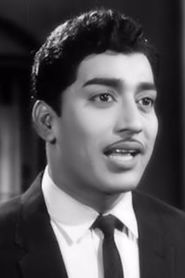
R. Diwakar is an Indian composer, best known for Tamil cinema. R. Diwakar began their career in 1964. With 30 credits to their name, R. Diwakar remains one of the most prolific and celebrated talents in the industry. An emerging voice in Tamil cinema, R. Diwakar is already attracting significant attention for their distinctive work.
Career Milestones
Film debut
View film →R. Diwakar by the Numbers
If you watched every R. Diwakar film back-to-back, you'd be at it for roughly 11 hours. Most-paired with M. A. Thirumugham — 3 films together.
Filmography
See all 30 credits →Collaboration Network
The Constellation
Top 2 most-paired collaborators. Bubble size and line thickness reflect how many films they share with R. Diwakar.
Career Analytics
Language Distribution
Films by Decade
Top Co-Actors
See all →R. Diwakar has worked most frequently with M. A. Thirumugham (3 films), and R. Muthuraman (2 films).

Legacy & Influence
R. Diwakar is a significant yet under-documented figure in the history of Kannada cinema, primarily recognized for his foundational work as a producer and studio owner during the industry's formative years. His most notable and enduring contribution was the establishment of the pioneering film studio, 'Diwakar Pictures,' in the late 1940s in Bangalore. This studio became a crucial production hub, providing the technical infrastructure and facilities necessary for the burgeoning Kannada film industry to grow independently. By offering a local alternative to studios in Madras or Bombay, Diwakar empowered Kannada filmmakers to produce films with greater creative control and cultural authenticity. His studio was instrumental in the production of several early Kannada talkies, supporting the work of key directors, technicians, and actors of the era. While specific film credits as a producer are scarce in common records, his role as an enabler and industrialist is acknowledged by historians of South Indian cinema. Diwakar's vision and investment in physical infrastructure helped stabilize film production in Karnataka during a period of transition and technological change. His legacy is thus not of a singular cinematic artist, but of a vital architect of the industry's ecosystem. He facilitated the conditions that allowed the creative voices of Kannada cinema to flourish, contributing indirectly but substantially to the development of a distinct regional film culture. This foundational support helped pave the way for the golden age of Kannada cinema that followed in subsequent decades.