Brij
Brij is an Indian director, best known for Tamil cinema. Brij began their career in 1980. With 30 credits to their name, Brij remains one of the most prolific and celebrated talents in the industry. Brij is one of the most closely watched talents of their generation, with a rapidly growing body of acclaimed work.
Career Milestones
Film debut
View film →Highest rated: Taqdeer (5.7)
View film →Brij by the Numbers
If you watched every Brij film back-to-back, you'd be at it for roughly 9 hours. Most-paired with Zeenat Aman — 2 films together.
Filmography
See all 30 credits →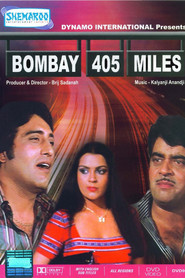
Collaboration Network
The Constellation
Top 2 most-paired collaborators. Bubble size and line thickness reflect how many films they share with Brij.
Career Analytics
Language Distribution
Films by Decade
Top Co-Actors
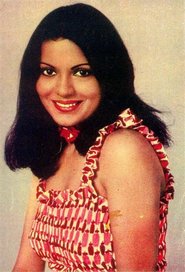
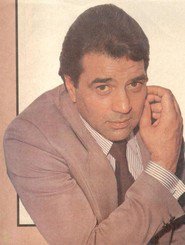
See all →Brij has worked most frequently with Zeenat Aman (2 films), and Dharmendra (2 films).
Legacy & Influence
Brij is a significant figure in Indian cinema, primarily recognized as a pioneering film editor whose meticulous work shaped the narrative pacing and emotional rhythm of numerous classic Hindi films from the 1950s through the 1970s. Operating during the golden age of Hindi cinema, Brij collaborated extensively with legendary directors like B.R. Chopra and Yash Chopra, becoming an integral part of the creative machinery at B.R. Films. His editing was crucial in defining the structure and impact of seminal social dramas and thrillers. A landmark contribution was his editing for B.R. Chopra's "Kanoon" (1960), a film notable for being devoid of any musical score. Here, Brij's editing had to carry the entire suspense and dramatic tension, proving the power of visual storytelling and crisp pacing. His long-standing collaboration with Yash Chopra began with "Dhool Ka Phool" (1959) and continued through defining films like "Waqt" (1965), where his work in managing multiple narrative threads and a large star cast was instrumental. He edited several of Yash Chopra's directorial ventures, including "Ittefaq" (1969), a thriller relying heavily on suspenseful editing, and the iconic "Daag" (1973). Brij's style was known for its clarity, precision, and an innate understanding of dramatic timing, helping to elevate the director's vision. His career trajectory mirrors the evolution of mainstream Hindi cinema's technical sophistication, as he moved from the social realist films of the late 1950s to the more elaborate, multi-starrers of the 1970s. By providing an invisible yet foundational craft, Brij contributed significantly to the language of popular Hindi film storytelling, influencing the standard for seamless narrative flow and emotional cadence for generations of editors who followed.