
Sayaji Shinde
Sayaji Shinde is an Indian actor, best known for Tamil cinema. Sayaji Shinde began their career in 1997 and has been a prominent figure in the industry for over 29 years. With over 150 credits to their name and an average audience rating of 6.0, Sayaji Shinde remains one of the most prolific and celebrated talents in the industry. Sayaji Shinde's influence on Tamil cinema is generational — their work continues to define the standard for the industry.
- Born
- Age
- 67
Biography
Sayaji Shinde is a Marathi and Hindi film actor, also prominent in Telugu and Tamil cinema, best known for playing powerful antagonists and character roles across multiple Indian film industries. He gained national recognition for his villain role in Shool (1999), a film he was recommended for by Manoj Bajpayee to director Ram Gopal Varma, and won the Filmfare Award for Best Actor in a Marathi film for Aboli (1995). He played the lead role of poet Subramania Bharati in the Tamil biographical film Bharathi (2000), demonstrating his range beyond villainy. His Telugu credits include Adhurs (2010), Bengal Tiger (2015), and Endukante... Premanta! (2012), and he appeared in high-profile Hindi productions such as Sarkar Raj (2008) and Sanju (2018).
Career Milestones
Film debut in Marathi cinema
Won Filmfare Award for Best Actor – Marathi
Breakthrough in Hindi cinema as villain
View film →Tamil State Award for portraying poet Subramanya Bharathi
View film →Nominated for Filmfare Best Supporting Actor – Telugu
Iconic Roles
Shool
A ruthless and feared politician-villain whose menacing portrayal is widely cited as one of Sayaji Shinde's career-defining performances and one of Bollywood's most memorable antagonists.
Lagaan: Once Upon a Time in India
A loyal henchman to the British antagonist Captain Russell, bringing cunning and manipulation to the supporting villain role in this Oscar-nominated film.
Gangs of Wasseypur
A cunning and influential character in Anurag Kashyap's crime epic, adding depth to the multi-layered narrative.
Hera Pheri
A gangster role that showcased Sayaji Shinde's comic timing alongside his trademark imposing screen presence.
Adhurs
A police officer role in this Telugu action film, one of several South Indian productions where he played authority figures.
Defining Moments
Portrayal of Bachhu 'Bhaiyyaji' Yadav — a ruthless criminal-politician who reigns through terror, with eyes that narrow in mock scrutiny and a smile with a pixie twist. His menacing presence haunted viewers long after the film.
Breakthrough Hindi film role that established him as a formidable villain actor; earned him a Filmfare Award nomination for Best Villain and brought national attention to his intensity and screen presence.
View film →Playing legendary Tamil poet Subramania Bharati — a non-Tamil speaker who underwent a rigorous 45-minute audition with poem recitations in full makeup to win the role, delivering a performance praised as 'simply splendid' by critics.
Won the Tamil Nadu State Award and the film won the National Film Award for Best Tamil Feature Film. Redefined his image beyond villain roles and proved his remarkable range and commitment to craft across languages.
View film →Delivery of the iconic dialogue 'Tinnama Padukunnama Tellarinda' as ACP Syed Mohammad Basha Khadri — a line so culturally resonant it directly inspired another Telugu film of the same name.
A rare achievement where a single line from a supporting performance becomes the title of a separate film, cementing his legacy in Telugu cinema and demonstrating the cultural weight of his delivery and screen presence.
Playing Naik, the morally complex police officer whose actions and authority drive key confrontations in the film.
Demonstrated his continued versatility in Telugu commercial cinema, holding his own alongside the lead cast in a high-profile NTR Jr. production.
View film →Playing Krishna Rao, the head of a large joint family, anchoring the emotional and familial narrative as Ram's father.
Showcased his evolution into warm, grounded character roles in mainstream Telugu romantic films, moving well beyond his villain persona to provide emotional depth to ensemble family narratives.
View film →Sayaji Shinde by the Numbers
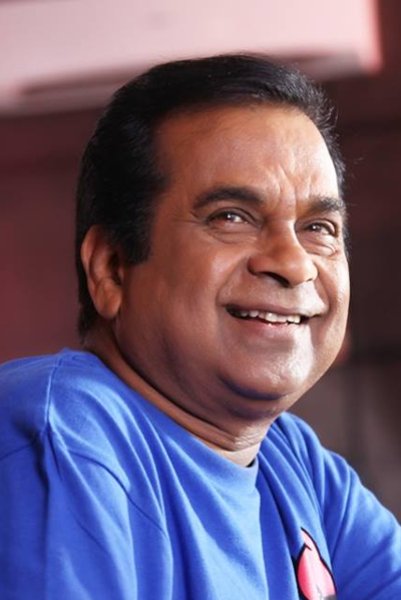
If you watched every Sayaji Shinde film back-to-back, you'd be at it for roughly 11 days and 20h. Most-paired with Brahmanandam — 21 films together.
Filmography
See all 150 credits →











Collaboration Network
The Constellation
Top 10 most-paired collaborators. Bubble size and line thickness reflect how many films they share with Sayaji Shinde.
Career Analytics
Genre Breakdown
Language Distribution
Films by Decade
Top Co-Actors
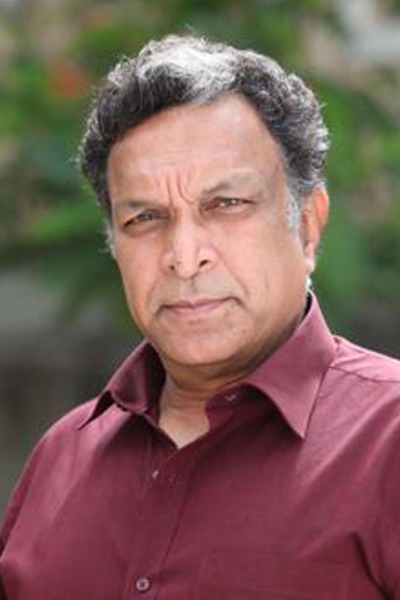
See all →Sayaji Shinde has worked most frequently with Puri Jagannadh (3 films), Srinu Vaitla (3 films), M. Raja (2 films), Sukumar (2 films), and V. V. Vinayak (2 films).







Did You Know?
Sayaji Shinde is known for his powerful portrayals of antagonists and character roles across multiple Indian film industries.
He began his acting career on stage, performing in Marathi one-act plays starting in 1978.
He is a recipient of the National Film Award for Best Supporting Actor for his role in the Marathi film 'Doghi' (1995).
He is a highly respected actor in Telugu cinema, often playing authoritative or villainous characters.
He has acted in over 200 films in various languages including Telugu, Hindi, Marathi, Tamil, Kannada, and Malayalam.
Legacy & Influence
Sayaji Shinde has carved a formidable legacy in Indian cinema as one of its most versatile and impactful character actors. With a career spanning over four decades and multiple language industries—most notably Telugu, Hindi, Marathi, and Tamil—his primary contribution lies in his masterful portrayals of complex antagonists and authoritative figures. His journey from Marathi theatre in the late 1970s to the national film stage exemplifies a dedication to craft that transcends regional boundaries. Shinde's breakthrough came with his chilling portrayal of the corrupt and menacing police officer Bachcha Yadav in E. Niwas's 'Shool' (1999), a performance that announced his arrival in Hindi cinema with formidable intensity. He further cemented his reputation as a go-to actor for powerful negative and character roles in the Telugu film industry, delivering memorable performances in blockbusters like 'Okkadu' (2003) and 'Pokiri' (2006), where his villains became iconic counterpoints to the protagonists. His ability to imbue his characters with a palpable sense of threat, gravitas, and occasionally dark humor, without descending into caricature, set a high benchmark for villainy in Indian cinema. Beyond antagonists, he has also excelled in sympathetic and pivotal supporting roles, such as in the Tamil film 'Azhagi' (2002), showcasing his emotional range. His filmography, exceeding 300 films, is a testament to his tireless work ethic and adaptability across diverse cinematic cultures. Shinde's influence is evident in how he helped elevate the importance and depth of character roles, particularly in mainstream Telugu and Hindi cinema, proving that these parts could be as memorable and critically significant as the lead roles. He paved the way for greater recognition of character actors and demonstrated that an actor's prowess, not just the size of the role, defines cinematic impact.