Vikramaditya Motwane
Vikramaditya Motwane is an Indian director, best known for Tamil cinema. Vikramaditya Motwane began their career in 2010 and has been a prominent figure in the industry for over 16 years. With 30 credits to their name and an average audience rating of 7.4, Vikramaditya Motwane remains one of the most prolific and celebrated talents in the industry. Vikramaditya Motwane is one of the most closely watched talents of their generation, with a rapidly growing body of acclaimed work.
- Born
- Age
- 49
Biography
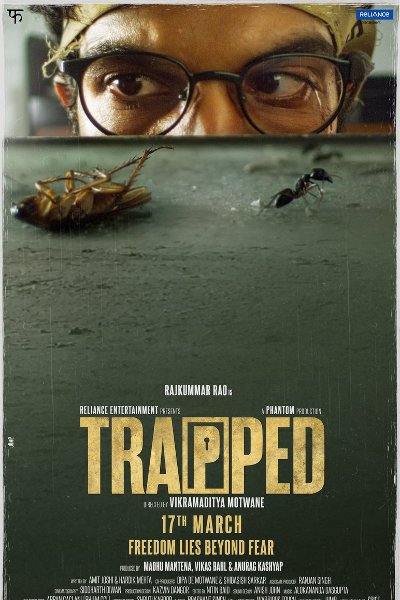
Vikramaditya Motwane is a Hindi film director and producer based in Mumbai, best known for his debut feature Udaan (2010), which premiered at the Cannes Film Festival in the Un Certain Regard section and won seven Filmfare Awards. His second film Lootera (2013), a period romantic drama starring Ranveer Singh and Sonakshi Sinha loosely based on O. Henry's 'The Last Leaf', is widely regarded as one of the finest Hindi films of the decade. Trapped (2017), a single-actor survival thriller featuring Rajkummar Rao, further demonstrated his preference for intimate, character-driven narratives over commercial formulas. He co-created the landmark Netflix series Sacred Games (2018) and has continued working across formats with AK vs AK (2020) and CTRL (2024).
Career Milestones
Directorial debut; film selected for Un Certain Regard at Cannes Film Festival
View film →Won seven Filmfare Awards including Best Story and Best Screenplay
View film →Directed critically acclaimed period romance
View film →Produced Queen, one of Bollywood's highest-grossing films of the year
Co-created and directed Netflix India's landmark crime thriller series Sacred Games
Defining Moments
The ending shot of Rohan running towards freedom — a direct tribute to François Truffaut's 'The 400 Blows' freeze-frame — after escaping his abusive father, signalling both rebellion and possibility
Became one of the most talked-about final frames in modern Hindi cinema; the Cannes Un Certain Regard selection and the audacity of showing a father as irredeemably cruel redefined the coming-of-age genre in Bollywood
View film →The teenage son slapping his tyrannical father — a visceral, unprecedented reversal of patriarchal power in mainstream Hindi cinema
Widely cited as a watershed moment for its unflinching portrayal of domestic abuse and the courage required to depict an Indian patriarch as the villain without redemption
View film →The dying Pakhi watching the last leaf on the tree — the O. Henry-inspired climax where Varun has secretly painted a leaf on the wall so she keeps the will to live
Considered one of the most romantically restrained and visually lyrical sequences in 2010s Hindi cinema; Sonakshi Sinha's performance in this scene earned her critical rehabilitation
View film →Shaurya (Rajkummar Rao) trapped alone in a high-rise apartment — the extended sequence where he improvises survival using a lighter, a rat, and sheer desperation over several days
Received a standing ovation at MAMI 2016; hailed as a masterclass in one-actor survival filmmaking and a searing metaphor for urban alienation; drew comparisons to '127 Hours' and 'Cast Away'
View film →The meta-film-within-a-film conceit where Anil Kapoor hires director Anurag Kashyap to make a documentary about him kidnapping his own daughter, blurring fiction and reality throughout
Called one of the most formally inventive Hindi films in years; the real-time mockumentary structure and casting of real filmmakers as themselves pushed boundaries of self-referential storytelling in Indian cinema
Vikramaditya Motwane by the Numbers
If you watched every Vikramaditya Motwane film back-to-back, you'd be at it for roughly 9 hours.
Filmography
See all 30 credits →

Career Analytics
Genre Breakdown
Language Distribution
Films by Decade
Did You Know?
Vikramaditya Motwane is an Indian film director, screenwriter, and producer known for his work in Hindi cinema.
He made his directorial debut with the critically acclaimed film 'Udaan' in 2010.
He co-founded the production company Phantom Films with Anurag Kashyap, Vikas Bahl, and Madhu Mantena in 2011.
He has collaborated frequently with actor Rajkummar Rao, directing him in 'Trapped' and 'Lootera'.
His film 'Udaan' was India's official entry for the Best Foreign Language Film at the 83rd Academy Awards.
Legacy & Influence
Vikramaditya Motwane is a prominent filmmaker and screenwriter in contemporary Indian cinema, recognized for his contributions to the growth of auteur-driven, content-focused Hindi cinema. He emerged as a key figure in the industry's shift towards more nuanced storytelling and sophisticated filmmaking techniques in the late 2000s and 2010s. His directorial debut, 'Udaan' (2010), co-written with Anurag Kashyap, was a critical landmark. Premiering at the Cannes Film Festival and winning the Critics' Week Viewers' Choice award, it signaled a new wave of Indian cinema that prioritized personal narratives, emotional authenticity, and artistic vision over commercial formulas. The film's success helped pave the way for a generation of filmmakers exploring similar coming-of-age and indie sensibilities. Motwane's subsequent work showcases a remarkable range, from the period drama 'Lootera' (2013), celebrated for its visual poetry and restrained emotion, to the gritty, realistic thriller 'Trapped' (2016), a survival drama made on a modest budget. He co-founded the production company Phantom Films, which until its dissolution was instrumental in producing and backing several significant, director-driven projects that expanded the creative boundaries of mainstream Hindi cinema, including 'Queen', 'Masaan', and 'Udta Punjab'. As a director, his meticulous craftsmanship, strong visual style, and ability to extract powerful performances from actors are hallmarks of his work. Beyond direction, his influence extends through his screenwriting and his role as a producer championing original voices. His Netflix series 'Sacred Games' (2018-2019), which he co-directed and co-wrote, was a watershed moment for Indian digital entertainment, demonstrating high production values, complex narratives, and adult themes on a streaming platform, thereby elevating audience expectations and industry standards for web series in India. While avoiding overt commentary, his films often explore themes of confinement, aspiration, and the human spirit against oppressive systems. Motwane's career trajectory represents a bridge between the indie film movement and accessible, high-quality mainstream cinema, contributing significantly to the diversification of storytelling and the elevation of directorial authorship in modern Indian filmmaking.