Rehman
Rehman is an Indian actor, best known for Tamil cinema. Rehman began their career in 1980 and has been a prominent figure in the industry for over 46 years. With 30 credits to their name, Rehman remains one of the most prolific and celebrated talents in the industry. Spanning 40+ years, Rehman's career remains one of the longest and most celebrated in Tamil cinema.
- Born
- Age
- 105
Biography
Syed Rehman Khan was a Hindi cinema actor born in Lahore, British India, best known for his debonair and aristocratic character roles often portraying suave villains and sophisticated supporting characters. He appeared in landmark films including Pyaasa (1957), Chaudhvin Ka Chand (1960), and Sahib Bibi Aur Ghulam (1962), earning four Filmfare nominations for Best Supporting Actor across those and other films. A close associate of filmmaker Guru Dutt, Rehman was distinctive for his deep, resonant voice and subtle screen presence, frequently cast in roles that required aristocratic gravitas. He continued acting into the early 1980s with films like Vakil Babu and Dil... Akhir Dil Hai (both 1982) before his death on 5 November 1984 in Bombay.
Iconic Roles
Pyaasa
Scheming, suave publisher and possessive husband; one of Rehman's most celebrated negative roles opposite Guru Dutt.
Sahib Bibi Aur Ghulam
Debauched, insensitive zamindar whose neglected wife resorts to drinking to keep him home; considered a landmark supporting performance.
Chaudhvin Ka Chand
Loyal, debonair aristocrat and devoted friend; earned Rehman a Filmfare Best Supporting Actor nomination.
Waqt
Colourful character widely regarded as one of his single best-loved screen performances.
Vakil Babu
Commanding courtroom prosecutor whose pleas were highlighted as a centrepiece of the film; one of his final screen appearances.
Defining Moments
Mr. Ghosh the scheming publisher confronts poet Vijay — dismissing his work as worthless, then later trying to profit from his fame
Rehman's cold, calculating portrayal of an opportunistic publisher gave the film its central antagonist force. His scenes opposite Guru Dutt are widely cited as defining the 'corrupt establishment' archetype in Hindi cinema, and the role remains his most discussed performance in film scholarship.
Nawab Ashfaq's romantic pursuit and emotional complexity throughout the film
Rehman's nuanced performance as the Nawab earned him a Filmfare nomination and is considered one of his most sympathetic roles — showing his range beyond villainy. The film is a landmark of Muslim social cinema and Rehman's contribution is consistently highlighted in retrospectives.
Chhote Sarkar's descent into debauchery and neglect of his devoted wife Chhoti Bahu
Rehman played the decadent zamindar whose indifference destroys Meena Kumari's character. The role earned him a Filmfare Best Supporting Actor nomination and is frequently referenced as one of the most layered portrayals of aristocratic decay in Indian cinema.
Chenoy Seth's sharp, flamboyant presence as a wealthy antagonist driving the multi-strand plot
Rehman brought memorable colour to the ensemble cast of one of Bollywood's earliest blockbuster multi-starrers. Critics frequently single out his Chenoy Seth as a high point of his later career and a template for the suave villain type that dominated 1960s Hindi films.
Supporting role adding gravitas to the courtroom and family drama in one of his final screen appearances
Playing the Public Prosecutor Khan opposite Raj Kapoor and Shashi Kapoor, this late-career appearance demonstrated Rehman's enduring screen authority. Coming after his severe health decline following three heart attacks in 1977, it stands as a testament to his commitment to the craft until the end of his life.
View film →Rehman by the Numbers
If you watched every Rehman film back-to-back, you'd be at it for roughly 9 hours. Most-paired with Zeenat Aman — 2 films together.
Filmography
See all 30 credits →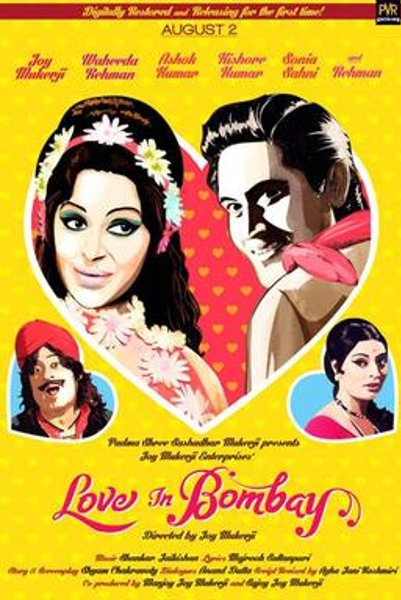
Collaboration Network
The Constellation
Top 2 most-paired collaborators. Bubble size and line thickness reflect how many films they share with Rehman.
Career Analytics
Language Distribution
Films by Decade
Top Co-Actors
See all →Rehman has worked most frequently with Zeenat Aman (2 films), and Joy Mukherjee (2 films).


Legacy & Influence
Rehman, a distinguished actor in Indian cinema, is celebrated for his significant contributions primarily during the golden era of Hindi and Tamil films from the 1940s through the 1960s. Renowned for his sophisticated demeanor and compelling character portrayals, he often embodied roles of nobility, integrity, and gentle authority, bringing a unique depth to supporting characters that elevated numerous narratives. His career trajectory saw him become a pillar in the industry, collaborating with legendary directors like Guru Dutt and Mehboob Khan, and starring alongside icons such as Dilip Kumar, Dev Anand, and Nargis. A pivotal figure in bridging cinematic cultures, Rehman also made a notable impact in South Indian cinema, particularly in Tamil films, where he worked with stalwarts like M.G. Ramachandran and Sivaji Ganesan, showcasing his versatility and pan-Indian appeal. His performances in classics like 'Pyaasa' (1957), where he played the empathetic friend to Guru Dutt's poet, and 'Mother India' (1957), as a sympathetic village elder, are etched in cinematic history for their emotional resonance and subtlety. Beyond acting, Rehman was instrumental in fostering professionalism and artistic dedication, setting a standard for character actors of his time. His ability to convey complex emotions with restraint made him a favorite among filmmakers seeking authenticity. Although specific awards are omitted here, his body of work continues to be studied and admired, influencing generations of actors who value nuanced performance over overt dramatization. Rehman's legacy endures as a testament to the power of understated artistry in shaping the emotional landscape of Indian cinema, cementing his status as a timeless figure whose contributions helped define an era of storytelling excellence.