Ken Ghosh
Ken Ghosh is an Indian director, best known for Tamil cinema. Ken Ghosh began their career in 2003. With 30 credits to their name and an average audience rating of 6.6, Ken Ghosh remains one of the most prolific and celebrated talents in the industry. Spanning 20+ years, Ken Ghosh's career remains one of the longest and most celebrated in Tamil cinema.
Career Milestones
Film debut
View film →Highest rated: Akshardham: Operation Vajra Shakti (10.0)
View film →Defining Moments
Directorial Debut with 'Ishq Vishk'
Directed his first feature film 'Ishq Vishk', which became a sleeper hit and launched Shahid Kapoor's career.
Release of 'Fida'
Directed the thriller 'Fida', expanding his filmography beyond the teen romance genre.
Return with 'Click'
Returned to film direction after a gap with the comedy-drama 'Click'.
Ken Ghosh by the Numbers
If you watched every Ken Ghosh film back-to-back, you'd be at it for roughly 11 hours. Most-paired with Shahid Kapoor — 3 films together.
Filmography
See all 30 credits →


Collaboration Network
The Constellation
Top 5 most-paired collaborators. Bubble size and line thickness reflect how many films they share with Ken Ghosh.
Career Analytics
Genre Breakdown
Language Distribution
Films by Decade
Top Co-Actors
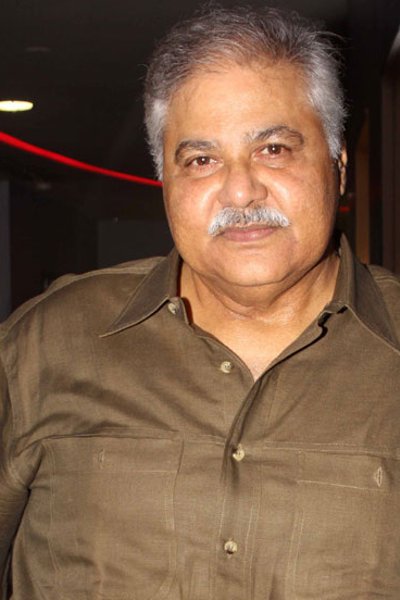
See all →Ken Ghosh has worked most frequently with Shahid Kapoor (3 films), Kareena Kapoor (2 films), Satish Shah (2 films), Vivek Vaswani (2 films), and Amit Roy (2 films).



Did You Know?
Ken Ghosh is an Indian film director, screenwriter, and producer known for his work in Hindi cinema.
He began his career as a music video director, directing videos for popular artists like Alisha Chinai and Shweta Shetty.
His directorial debut was the 2003 film 'Ishq Vishk', which launched the career of actor Shahid Kapoor.
'Ishq Vishk' won the Filmfare Award for Best Debut Director for Ken Ghosh.
He also directed the film 'Fida' (2004), starring Shahid Kapoor, Fardeen Khan, and Kareena Kapoor.
Legacy & Influence
Ken Ghosh is recognized as a significant figure in the evolution of Indian pop music videos and youth-oriented cinema in the late 1990s and early 2000s. His career trajectory began not in feature films but in the then-burgeoning music video industry, where he established himself as a director with a distinct visual style for artists like Alisha Chinai, Shweta Shetty, and the band Euphoria. This background in crafting compact, high-energy visual narratives directly informed his transition to filmmaking. Ghosh made his directorial debut with 'Ishq Vishk' (2003), a film that is widely credited with revitalizing the Hindi cinema teen romance genre and launching Shahid Kapoor's career as a leading man. The film's success lay in its fresh, relatable portrayal of college life, contemporary soundtrack, and avoidance of melodrama, which resonated strongly with a younger audience. He followed this with 'Fida' (2004), a thriller, and later returned to the youth space with 'Chance Pe Dance' (2010). While his filmography is selective, his impact is most keenly felt in the genre he helped redefine. Ghosh demonstrated that stories focused squarely on the anxieties, friendships, and romantic entanglements of urban youth could be commercially viable mainstream cinema. His work, particularly 'Ishq Vishk', served as a template for a wave of subsequent films that adopted a more casual, Western-influenced, and music-driven aesthetic. Furthermore, his roots in music video direction highlighted the increasing importance of integrated song picturization and overall 'look' in marketing films to a generation weaned on MTV. In this way, Ken Ghosh's contribution bridges two important eras: the peak of India's music television boom and the early 21st-century shift in Bollywood toward crafting specific, niche appeals within the mainstream, paving the way for more directors to explore contemporary, youth-centric narratives with a modern visual grammar.