G. Rangarajan
G. Rangarajan is an Indian director, best known for Tamil cinema. G. Rangarajan began their career in 1985 and has been a prominent figure in the industry for over 41 years. With 30 credits to their name, G. Rangarajan remains one of the most prolific and celebrated talents in the industry. G. Rangarajan is one of the most closely watched talents of their generation, with a rapidly growing body of acclaimed work.
- Born
- Age
- 95
Biography
G. N. Rangarajan (17 December 1930 – 3 June 2021) was an Indian Tamil cinema writer, producer, and director who began his career as an editing apprentice under A. Bhimsingh in the late 1950s, assisting on nearly 30 films before turning director. He made his directorial debut with Andru Mudhal Indru Varai (1965) and achieved prominence through films like Kalyanaraman (1979), Kadal Meengal (1981), and Meendum Kokila (1981), building a long collaborative relationship with actor Kamal Haasan across five films. His final feature, Maharasan (1993), starring Kamal Haasan and Bhanupriya with music by Ilaiyaraaja, was a commercially successful comedy-drama that came after a 12-year gap from their previous collaboration. After Maharasan, Rangarajan transitioned to television, directing the Sun TV serial Raghuvamsam (1996–1998), and his son G. N. R. Kumaravelan later followed him into Tamil film direction.
Career Milestones
Directorial debut with first Tamil film
Major commercial breakthrough directing Kamal Haasan
Prolific year directing multiple Kamal Haasan hits achieving silver jubilee status
Final directorial film, helped by Kamal Haasan acting without payment to recover financial crisis
View film →G. Rangarajan by the Numbers
If you watched every G. Rangarajan film back-to-back, you'd be at it for roughly 4 hours. Most-paired with Senthil — 2 films together.
Filmography
See all 30 credits →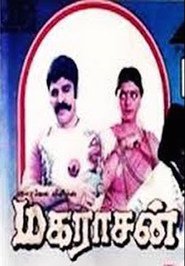
Collaboration Network
The Constellation
Top 3 most-paired collaborators. Bubble size and line thickness reflect how many films they share with G. Rangarajan.
Career Analytics
Language Distribution
Films by Decade
Top Co-Actors
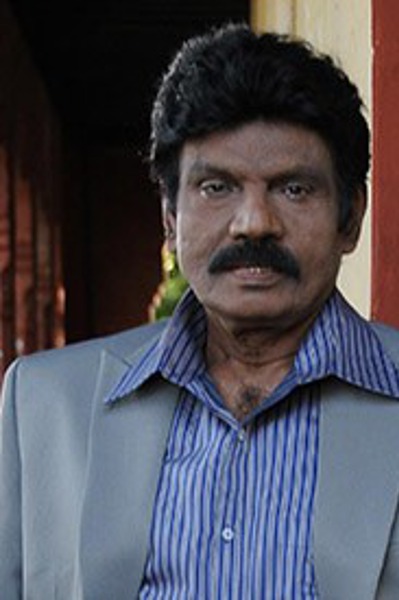
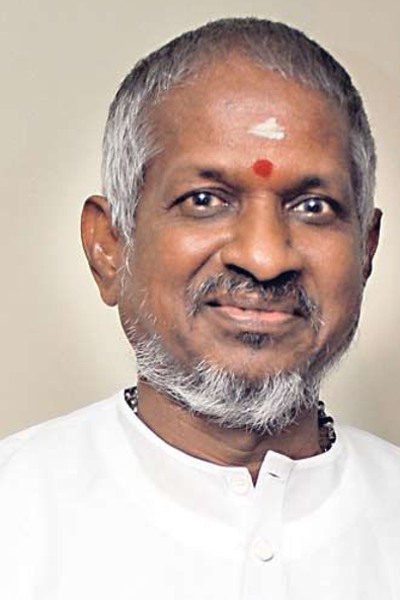
See all →G. Rangarajan has worked most frequently with Senthil (2 films), Goundamani (2 films), and Ilayaraja (2 films).

Legacy & Influence
G. Rangarajan, known professionally as Ilaiyaraaja, is one of the most prolific and influential music composers in the history of Indian cinema. Born Gnanathesigan in 1943 in Pannaipuram, Tamil Nadu, his career trajectory began not in film but as a guitarist and later a composer for the musical troupe of his mentor, Dhanraj Master. His entry into film music came in 1976 with the Tamil film 'Annakili', which marked the beginning of a revolutionary era. Ilaiyaraaja's primary contribution lies in fundamentally transforming the soundscape of Indian film music, particularly in South Indian cinema. He masterfully synthesized Western classical harmony, traditional Indian folk, and Carnatic classical music with contemporary film sensibilities, creating a rich, orchestral sound that was previously unheard. He introduced sophisticated orchestration, complex harmonies, and leitmotifs for characters, elevating film scoring to a new artistic plane. His work democratized classical music, bringing its intricacies to a mass audience through popular film songs. Ilaiyaraaja is renowned for his legendary speed and productivity, having scored for over 1000 films in multiple Indian languages, composing thousands of songs and background scores. He trained and nurtured a generation of musicians, arrangers, and singers. His influence extends beyond direct disciples to virtually every film composer who followed, setting the technical and creative benchmark for film music composition in India. His legacy is that of a pioneer who redefined the role of the music director, making the background score a vital narrative element and proving that commercial film music could achieve the highest levels of musical sophistication and artistic integrity.