Muthyala Subbaiah
Muthyala Subbaiah is an Indian director, best known for Tamil cinema. Muthyala Subbaiah began their career in 1991 and has been a prominent figure in the industry for over 35 years. With 30 credits to their name, Muthyala Subbaiah remains one of the most prolific and celebrated talents in the industry. Spanning 30+ years, Muthyala Subbaiah's career remains one of the longest and most celebrated in Tamil cinema.
- Born
- Age
- 75
Biography
Muthyala Subbaiah is a Telugu cinema director from Andhra Pradesh, born in K. Bitragunta village, Prakasam district, known primarily for emotionally-driven family dramas that earned him the nickname 'Sentiment Subbaiah.' His most commercially successful films include Pelli Chesukundam (1997) starring Venkatesh and Soundarya, Annayya (2000) starring Chiranjeevi — a sibling-bond drama that was both a commercial and critical success — and Aruna Kiranam (1986) starring Rajasekhar and Vijayashanti. Over a career spanning roughly 50 Telugu films, he established a recurring directorial style centered on human emotion, family relationships, and sentiment, frequently collaborating with top stars like Chiranjeevi and Venkatesh. He began his career as an assistant and co-director working alongside T. Krishna for approximately ten films before striking out independently with his 1983 debut Moodu Mulla Bandham.
Career Milestones
Directorial debut and entry into Telugu film industry after assisting on 'Sisindri Chittibabu'
Directed Pavitra Bandham, which won the National Film Award for Best Feature Film in Telugu and Nandi Award for Best Feature Film
View film →Won Nandi Award for Best Director
Directed Tholi Valapu, notable as Gopichand's film debut
View film →Felicitated by Telugu Film Distributors Association during NTR centenary celebrations, recognizing lifetime contribution to Telugu cinema
Defining Moments
Venkatesh's emotional confrontation scene where his NRI character Vijay finally breaks down and reconciles with his estranged father, accepting the value of family ties over his Western-influenced individualism
This defining emotional scene encapsulates Subbaiah's signature 'sentiment' style and became one of the most-recalled moments of his career. The film was a massive blockbuster and cemented the Venkatesh–Soundarya pairing as a box-office draw.
View film →Chiranjeevi's 'Hitler' character transforming from domineering overprotective brother to selfless protector of his five sisters against societal and criminal threats
Hitler was a major commercial success with a 100+ day run and became one of Chiranjeevi's celebrated brother-sister sentiment films. Subbaiah's direction of the emotional family dynamics was widely praised.
View film →Venkatesh's character Anand publicly accepting and sheltering Santhi, a rape survivor, defying societal scorn — openly declaring his support for her in front of condemning relatives and neighbors
Became iconic for its bold social message within a mainstream masala framework. Subbaiah used sentiment not just for family drama but for social commentary, making this a defining instance of that approach.
View film →Venkatesh narrating the painful flashback of the female protagonist's trauma to justify his unconditional love — the flashback reveal scene that recontextualizes the entire story
Frequently cited as the emotional core of the film and a showcase of Subbaiah's mastery of sentimental storytelling.
View film →The climax where elder brother Rajaram (Chiranjeevi) sacrifices his safety to shield his younger brothers from the villain's assault, resolving in a cathartic confrontation blending action with unconditional sibling love
Widely remembered as one of Chiranjeevi's most emotionally charged sequences of that era. The brotherly-sacrifice theme became a template for subsequent Telugu family entertainers.
View film →Muthyala Subbaiah by the Numbers
If you watched every Muthyala Subbaiah film back-to-back, you'd be at it for roughly 1 day and 11h. Most-paired with Raasi — 4 films together.
Filmography
See all 30 credits →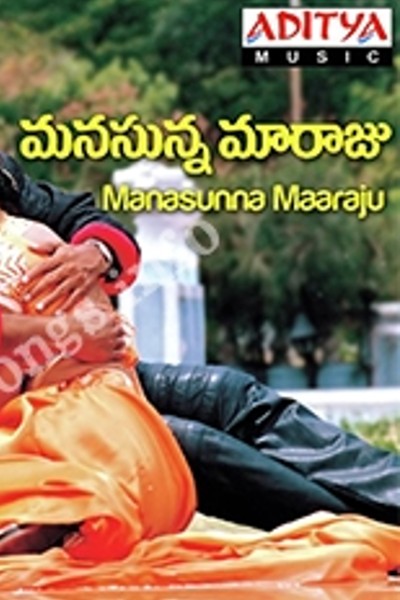
Collaboration Network
The Constellation
Top 10 most-paired collaborators. Bubble size and line thickness reflect how many films they share with Muthyala Subbaiah.
Career Analytics
Language Distribution
Films by Decade
Top Co-Actors
See all →Muthyala Subbaiah has worked most frequently with Raasi (4 films), Soundarya (3 films), Rajasekhar (3 films), Kota Srinivasa Rao (2 films), and M. S. Narayana (2 films).





Legacy & Influence
Muthyala Subbaiah is a significant figure in Telugu cinema, primarily recognized as a prolific film producer and the founder of the production banner Muthyala Movies. His career trajectory is defined by a strategic shift from distribution to production, where he played a crucial role in backing and nurturing numerous commercially successful films, particularly in the 1980s and 1990s. Subbaiah's major contribution lies in his keen eye for marketable subjects and his ability to collaborate with emerging and established talent, thereby facilitating projects that resonated strongly with mass audiences. He is closely associated with the rise of actor Chiranjeevi, having produced several of the star's landmark films that cemented his 'megastar' status, including major box office hits like 'Khaidi' (1983), which was a pivotal film in Chiranjeevi's career, and 'Challenge' (1984). Through Muthyala Movies, Subbaiah produced a string of action-packed, entertainment-driven films that defined a specific era of Telugu cinema, often featuring powerful themes of heroism, justice, and family sentiment. His production philosophy emphasized high production values within commercial frameworks, contributing to the technical and narrative standards of mainstream Telugu films. While not a director or creative writer himself, his role as a financier and producer provided a stable platform for directors like A. Kodandarami Reddy and writers to execute their visions. His legacy is that of a pragmatic and successful film businessman whose banner became synonymous with a certain brand of dependable, star-driven commercial cinema that dominated the industry for over a decade. The continued recognition of the Muthyala Movies brand underscores his lasting impact on the business infrastructure and popular film culture of Telugu cinema.