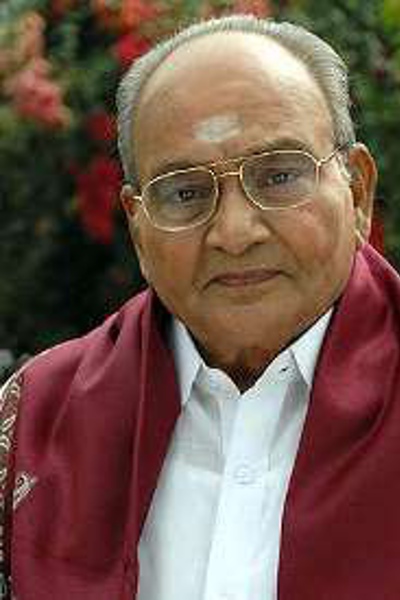
K. Vishwanath
K. Vishwanath is an Indian director, best known for Tamil cinema. K. Vishwanath began their career in 1979 and has been a prominent figure in the industry for over 47 years. With over 60 credits to their name, K. Vishwanath remains one of the most prolific and celebrated talents in the industry. Spanning 40+ years, K. Vishwanath's career remains one of the longest and most celebrated in Tamil cinema.
- Born
- Age
- 96
Biography
Kasinathuni Viswanath is an Indian film, sound designer turned director and actor known for his works in Telugu Cinema, and Bollywood. He is the recipient of five National Film Awards, five Nandi Awards, ten Filmfare Awards South, and a Bollywood Filmfare Award. Viswanath's Hindi films include Sargam, Kaamchor, Sanjog, Jaag Utha Insan, Eeshwar, Sur Sangam, Shubh Kaamna, Sangeet and Dhanwaan. Viswanath has received international recognition for his works, and is known for blending parallel cinema elements with mainstream commercial cinema.\r\n\r\nViswanath's classical films Sankarabharanam (1979) and Sagara Sangamam (1983) were included among CNN-IBN's list of hundred greatest Indian films of all time. His directorial works Sankarabharanam and Saptapadi, have garnered the National Film Award for Best Popular Film Providing Wholesome Entertainment and Best Feature Film on National Integration, respectively. Sankarabharanam, was premiered at the 8th International Film Festival of India, the Tashkent Film Festival, and the Moscow International Film Festival held in May 1980, and has also won the Prize of the Public at the Besancon Film Festival of France in the year 1981.
Career Milestones
Film debut
View film →Highest rated: Swathi Kiranam (8.5)
View film →Iconic Roles
Shubha Sankalpam
Played a pivotal elderly character in this family drama.
Kuruthipunal
Portrayed a dual role in this Tamil political thriller.
Kakkai Siraginilae
Played a traditional grandfather figure in this Tamil film.
Defining Moments
Release of 'Sankarabharanam'
The film became a massive critical and commercial success, revolutionizing the portrayal of classical music in popular cinema and winning a National Film Award.
Release of 'Swati Mutyam'
His film starring Kamal Haasan was selected as India's official entry for the Academy Award for Best Foreign Language Film.
Dadasaheb Phalke Award
Was honored with the highest award in Indian cinema for his lifetime contribution.
K. Vishwanath by the Numbers
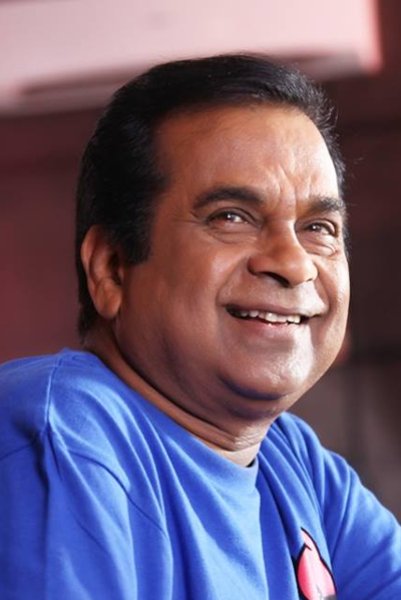
If you watched every K. Vishwanath film back-to-back, you'd be at it for roughly 3 days and 14h. Most-paired with Brahmanandam — 6 films together.
Filmography
See all 60 credits →

Collaboration Network
The Constellation
Top 10 most-paired collaborators. Bubble size and line thickness reflect how many films they share with K. Vishwanath.
Career Analytics
Genre Breakdown
Language Distribution
Films by Decade
Top Co-Actors
See all →K. Vishwanath has worked most frequently with Brahmanandam (6 films), Nayantara (4 films), Suhasini Maniratnam (3 films), Nizhalgal Ravi (2 films), and Nassar (2 films).



Did You Know?
K. Vishwanath was awarded the Padma Shri in 1992 and the Padma Vibhushan in 2017 for his contributions to Indian cinema.
He began his career as a sound designer and later transitioned to directing, with his directorial debut being 'Aatma Gowravam' (1965).
His film 'Sankarabharanam' (1979) is considered a landmark in Indian cinema, successfully bridging classical music with popular film.
He received the Dadasaheb Phalke Award, India's highest award in cinema, in 2016.
Many of his films, such as 'Sagara Sangamam' (1983) and 'Swati Mutyam' (1986), were known for addressing social issues with artistic subtlety.
Photos
See all →
News & Stories
Will K.Viswanath’s dream come true?
8/7/2015
Legacy & Influence
Kasinathuni Viswanath, popularly known as K. Vishwanath, is a towering figure in Indian cinema, celebrated for his profound artistic vision and commitment to culturally rich storytelling. Beginning his career as a sound designer, he transitioned to direction, carving a unique niche by crafting films that elegantly bridged classical Indian arts with mainstream Telugu cinema and later Bollywood. His directorial works, such as 'Sankarabharanam' (1979), 'Sagara Sangamam' (1983), and 'Swati Mutyam' (1986), are landmark achievements. These films are renowned for their deep exploration of themes like the preservation of traditional arts, humanism, and social harmony, often set against the backdrop of music and dance. Vishwanath's cinema stood out for its aesthetic sophistication, nuanced character portrayals, and avoidance of crude commercial tropes, earning critical acclaim and popular success simultaneously. He played a pivotal role in revitalizing interest in classical music and dance among the masses. His foray into Hindi cinema with films like 'Sargam' (1979) and 'Kaamchor' (1982) introduced his sensitive storytelling to a pan-Indian audience, influencing a generation of filmmakers across languages. His legacy is defined by a body of work that is both entertaining and intellectually stimulating, championing the idea that commercial cinema can be a vehicle for high art and social commentary. He is remembered as a director who brought dignity, cultural depth, and artistic integrity to the forefront of Indian filmmaking.