Bapu
Bapu is an Indian director, best known for Tamil cinema. Bapu began their career in 1980 and has been a prominent figure in the industry for over 46 years. With 30 credits to their name, Bapu remains one of the most prolific and celebrated talents in the industry. Spanning 40+ years, Bapu's career remains one of the longest and most celebrated in Tamil cinema.
- Born
- Age
- 92
Biography
Bapu (born Sattiraju Lakshminarayana, 15 December 1933 – 31 August 2014) was a Telugu and Hindi film director, also celebrated as a painter, illustrator, and cartoonist, primarily known for mythological and devotional films rooted in classical Indian aesthetics. His directorial debut Saakshi (1967) was screened at the Tashkent Film Festival, and his most iconic work Sri Rama Rajyam (2011) earned him the National Film Award; over his career he received seven Nandi Awards, two Filmfare Awards South, and the Padma Shri in 2013. His films are distinguished by their meticulous visual style drawn from his background as a fine artist, with mythological subjects rendered through hand-crafted sets and costume design that closely mirrored classical Telugu painting traditions. His decades-long creative partnership with screenwriter Mullapudi Venkata Ramana, spanning over 60 Telugu and Hindi films including Hum Paanch (1980) and Seetha Kalyanam (1976), remains one of the most celebrated collaborations in Indian cinema.
Career Milestones
Directorial debut with Saakshi, selected for Tashkent International Film Festival
Seeta Kalyanam screened at BFI London, Chicago, and San Reno film festivals; included in British Film Institute curriculum
Debut in Hindi cinema with Hum Paanch
View film →Final directorial work, Sri Rama Rajyam, a grand mythological epic
View film →Awarded Padma Shri by Government of India for contributions to art and cinema
Defining Moments
Directorial debut with Saakshi — shot entirely on outdoor locations rather than in studios, a radical departure for Telugu cinema of the era. The film was screened at the Tashkent Film Festival (1968), marking Bapu's arrival as a distinct cinematic voice.
First major Telugu film shot fully on location; introduced Bapu's grounded naturalistic aesthetic and earned international festival recognition, establishing his reputation as a serious filmmaker.
Bapu's hand-drawn storyboard-driven visual storytelling in Sampoorna Ramayanamu, where his painter's eye translated Hindu mythology into a coherent cinematic language — each frame composed with the precision of an illustrator, setting a new benchmark for mythological films in Telugu cinema.
Considered a milestone of Telugu cinema; Bapu's unique fusion of his illustration/cartooning background with filmmaking created a visual grammar for mythological storytelling that influenced the genre for decades.
Mana Voori Pandavulu's warm, humour-laced portrayal of rural Telugu life, winning the Filmfare Award for Best Film - Telugu and cementing the Bapu-Mullapudi Venkata Ramana creative partnership as the defining voice of Telugu cultural identity on screen.
Award-winning film that crystallised Bapu's hallmark — authentic nativity, subtle humour, and affectionate observation of everyday Telugu life — earning mainstream industry recognition.
Mister Pellam's sharp satirical dissection of male ego and gender roles in a middle-class Telugu household, earning the National Film Award for Best Feature Film in Telugu.
National Award-winning work demonstrating Bapu's range beyond mythology into social satire; widely cited as one of the finest Telugu comedies with genuine thematic depth.
The closing mythological grandeur of Sri Rama Rajyam — particularly the Bhoodevi sequence, the Pushpaka Vimanam, and palace visuals — designed by Bapu himself as his final film and final collaboration with Mullapudi Venkata Ramana, serving as a career-spanning summation of his aesthetic.
Bapu's swan song as a director; the visuals were a direct expression of a lifetime of mythological painting and illustration, widely praised as a fitting, beautiful conclusion to a legendary career.
View film →Bapu by the Numbers
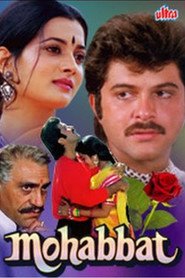
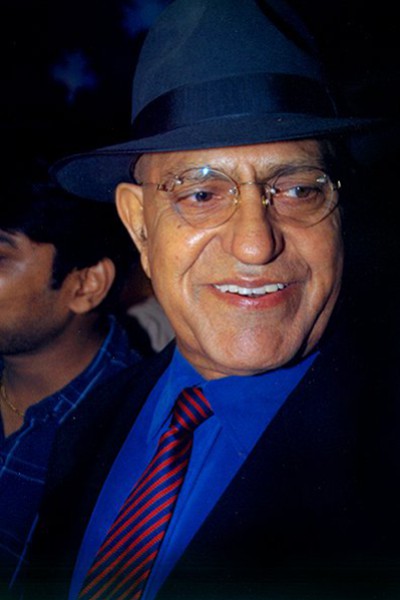
If you watched every Bapu film back-to-back, you'd be at it for roughly 1 day and 13h. Most-paired with Amrish Puri — 4 films together.
Filmography
See all 30 credits →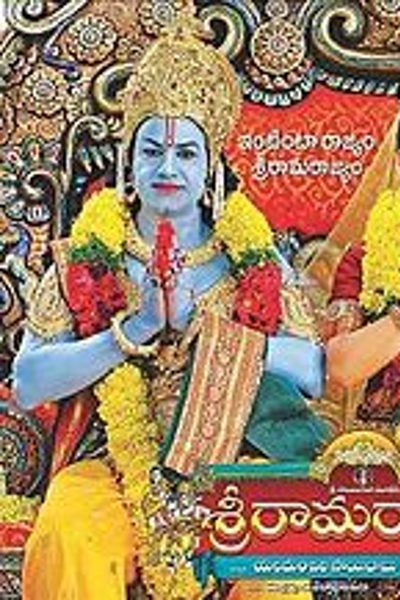
Collaboration Network
The Constellation
Top 10 most-paired collaborators. Bubble size and line thickness reflect how many films they share with Bapu.
Career Analytics
Language Distribution
Films by Decade
Top Co-Actors
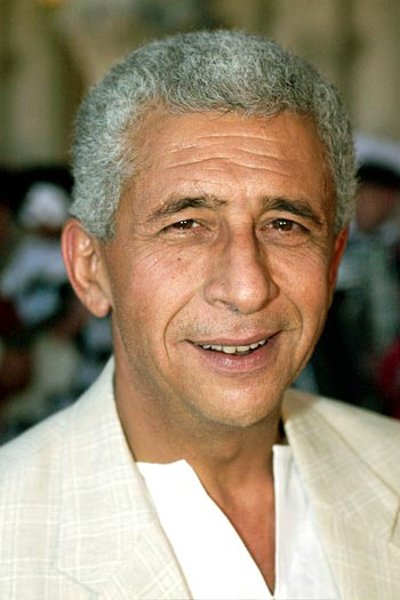
See all →Bapu has worked most frequently with Amrish Puri (4 films), Shakti Kapoor (3 films), Naseeruddin Shah (3 films), Mithun Chakraborty (3 films), and Anil Kapoor (3 films).






Legacy & Influence
Bapu, born Sattiraju Lakshminarayana, was a seminal figure in Indian cinema, renowned as a director, screenwriter, illustrator, and painter. His career, primarily in Telugu cinema, spanned several decades and was distinguished by a unique aesthetic that blended rich visual artistry with profound storytelling rooted in Indian culture and mythology. Bapu's trajectory began with his close collaboration with writer Mullapudi Venkata Ramana, a partnership that yielded numerous classic films. He made his directorial debut with 'Sakshi' (1967), but it was films like 'Sampoorna Ramayanam' (1971) and 'Sri Ramanjaneya Yuddham' (1975) that established his mastery in adapting mythological and folklore subjects with a distinctive pictorial quality, earning him the descriptor 'a painter on celluloid.' His contribution extended beyond mythology to social dramas and literary adaptations, such as the critically acclaimed 'Muthyala Muggu' (1975) and 'Tyagayya' (1981), a biographical film on the saint-composer. Bapu's style was characterized by elegant simplicity, strong female characters, soulful music integration (often with composer K. V. Mahadevan), and a deep humanism. He played a pivotal role in shaping the visual narrative language of Telugu cinema, influencing a generation of filmmakers with his emphasis on artistic framing and emotional depth over spectacle. His work in Hindi cinema, including films like 'Hum Paanch' (1980) and 'Woh Saat Din' (1983), brought his sensitive storytelling to a national audience. Beyond direction, his contributions as a gifted illustrator and cartoonist for publications like 'Andhra Patrika' showcased his versatility and connection to everyday life. Bapu's legacy endures as that of a cultural custodian who elevated cinema to a visual art form while staying deeply connected to its literary and ethical roots, leaving an indelible mark on India's cinematic heritage.