Ramesh Sippy
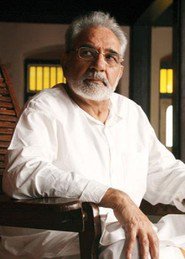
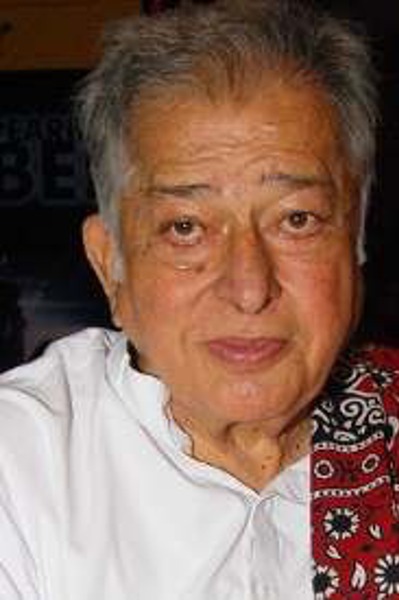
Ramesh Sippy is an Indian director, best known for Tamil cinema. Ramesh Sippy began their career in 1980 and has been a prominent figure in the industry for over 46 years. With 30 credits to their name, Ramesh Sippy remains one of the most prolific and celebrated talents in the industry. Spanning 40+ years, Ramesh Sippy's career remains one of the longest and most celebrated in Tamil cinema.
- Born
- Age
- 79
Biography
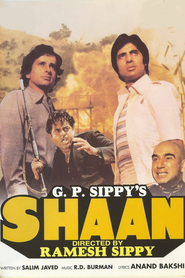
Ramesh Sippy is a Hindi cinema director and producer, best known for directing Sholay (1975), widely regarded as one of the greatest Indian films ever made. He directed a string of major commercial hits including Shaan (1980), Shakti (1982) starring Amitabh Bachchan and Dilip Kumar, and Saagar (1985), and received the Filmfare Best Film of 50 Years award for Sholay in 2005. His directorial style favored large-scale action entertainers with ensemble casts and masala genre conventions blending action, drama, romance, and comedy. He was awarded the Padma Shri by the Government of India in 2013 for his contributions to Hindi cinema.
Career Milestones
Directed debut feature Andaz
Directed Seeta Aur Geeta, his first major box office hit
Directed Sholay, which became the highest-grossing Bollywood film of its era and was declared BBC's Best Film of the Millennium
Directed Shakti starring Dilip Kumar and Amitabh Bachchan, winning Filmfare Award for Best Film
View film →Created and produced Buniyaad, a landmark TV serial on Doordarshan that became one of India's most-watched shows
Defining Moments
Gabbar Singh's 'Kitne aadmi the?' interrogation scene — Gabbar toys with his returning henchmen before executing them, establishing him as one of Hindi cinema's most iconic villains
Defined the archetype of the Bollywood villain; Amjad Khan's performance and the dialogue became permanently embedded in Indian popular culture. The scene showcases Sippy's mastery of tension-through-theater.
The train robbery opening sequence — a precisely choreographed action set-piece introducing Jai and Veeru across a moving train
Demonstrated Sippy's command of large-scale action filmmaking, unprecedented in Hindi cinema at the time; shot on 70mm with stereophonic sound, it set a new technical benchmark.
Radha (Jaya Bachchan) communicating through the diya (lamp) — a silent, wordless scene expressing grief and longing without dialogue
Widely cited by critics as proof of Sippy's tonal range; balances the film's bombast with intimate emotional restraint, elevating Sholay beyond a genre action film.
Vijay (Amitabh Bachchan) and J.K. (Amitabh Bachchan / Dilip Kumar) confrontation — father-son identity clash driven by conflicting moral codes
Pairing Dilip Kumar and Amitabh Bachchan for the first and only time on screen was itself a historic event; Sippy extracted restrained, career-best performances from both, making the film a study in generational tension.
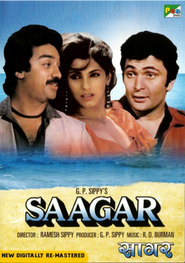
View film →Rocky and Sonu's 'Saagar Kinare' romantic sequence on the beach — expansive, sun-drenched visuals paired with R.D. Burman's landmark score
Redefined the romantic musical in 1980s Bollywood; the song and its picturisation are considered among the finest of the decade and demonstrated Sippy's ability to reinvent himself beyond action epics.
View film →Ramesh Sippy by the Numbers
If you watched every Ramesh Sippy film back-to-back, you'd be at it for roughly 1 day and 1h. Most-paired with Amitabh Bachchan — 3 films together.
Filmography
See all 30 credits →


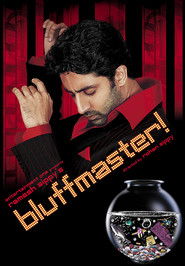
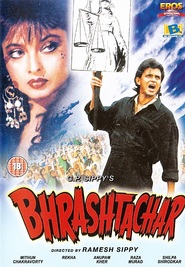
Collaboration Network
The Constellation
Top 9 most-paired collaborators. Bubble size and line thickness reflect how many films they share with Ramesh Sippy.
Career Analytics
Language Distribution
Films by Decade
Top Co-Actors
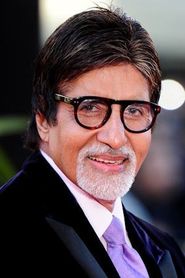
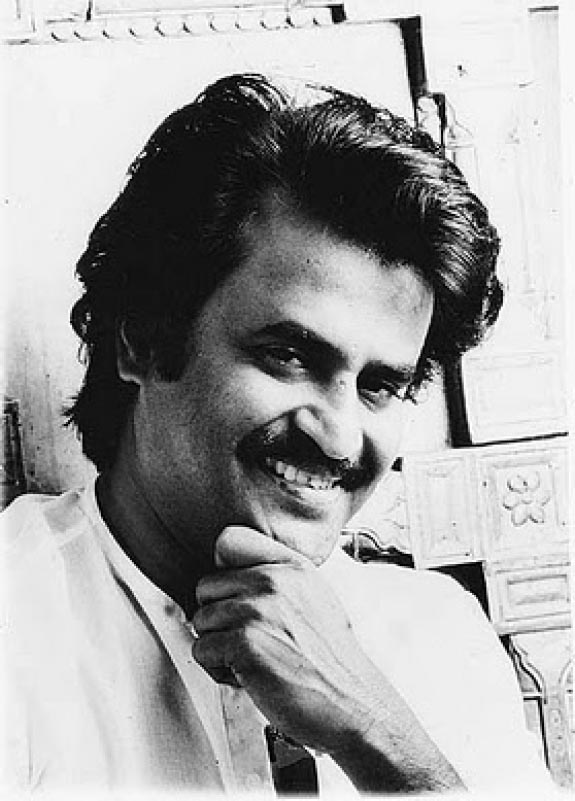
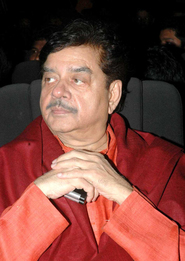
See all →Ramesh Sippy has worked most frequently with Amitabh Bachchan (3 films), Rajinikanth (2 films), Shatrughan Sinha (2 films), Kulbhushan Kharbanda (2 films), and Vikas Anand (2 films).


Legacy & Influence
Ramesh Sippy is a seminal figure in Indian cinema, best known as the director of the iconic film 'Sholay' (1975), which redefined the action-adventure genre and stands as a landmark in Bollywood history. His career trajectory began with assisting his father, producer G.P. Sippy, before making his directorial debut with 'Andaz' (1971). While 'Andaz' was a success, it was 'Sholay' that cemented his legacy. The film's innovative narrative structure, ensemble cast, memorable characters, and technical prowess in cinematography and sound design set new benchmarks for Indian filmmaking. Its commercial success and enduring popularity over decades have made it a cultural touchstone. Sippy further demonstrated his versatility with films like the romantic drama 'Sagar' (1985) and the social crime thriller 'Shakti' (1982), which featured powerful performances and strong storytelling. His contribution extends beyond direction; as a producer and head of his family's production house, he has been involved in numerous projects, influencing the industry's commercial and creative landscape. Sippy's work, particularly 'Sholay', is studied for its impact on film language, genre blending, and its role in shaping the 'masala' film format. His films are frequently referenced, remixed, and celebrated, ensuring his permanent place in the annals of Indian cinema.