Shibu Mitra
Shibu Mitra is an Indian director, best known for Tamil cinema. Shibu Mitra began their career in 1979. With 30 credits to their name, Shibu Mitra remains one of the most prolific and celebrated talents in the industry. Spanning 40+ years, Shibu Mitra's career remains one of the longest and most celebrated in Tamil cinema.
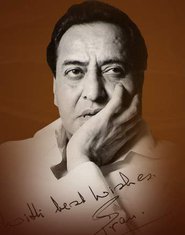
Career Milestones
Film debut
View film →Highest rated: Mujhe Vachan Do (8.0)
View film →Shibu Mitra by the Numbers
If you watched every Shibu Mitra film back-to-back, you'd be at it for roughly 2 days and 8h. Most-paired with Shakti Kapoor — 8 films together.
Filmography
See all 30 credits →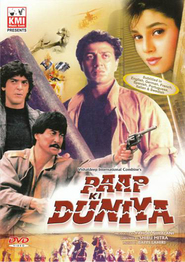
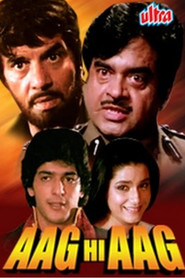
Collaboration Network
The Constellation
Top 10 most-paired collaborators. Bubble size and line thickness reflect how many films they share with Shibu Mitra.
Career Analytics
Language Distribution
Films by Decade
Top Co-Actors
See all →Shibu Mitra has worked most frequently with Shakti Kapoor (8 films), Pran (6 films), Amjad Khan (6 films), Chunky Panday (5 films), and Danny Denzongpa (4 films).





Legacy & Influence
Shibu Mitra is a respected figure in the Bengali film industry, primarily recognized for his work as a cinematographer. His career trajectory is defined by a long-standing and fruitful collaboration with acclaimed director Goutam Ghose, contributing significantly to the visual storytelling of several landmark films. Mitra's cinematography is noted for its poetic realism, meticulous composition, and ability to capture the nuanced landscapes—both physical and emotional—of Bengali narratives. A cornerstone of his legacy is his work on Ghose's 'Padma Nadir Majhi' (1993), a film celebrated for its profound humanism and depiction of riverine life. Mitra's camera work was instrumental in creating the film's atmospheric depth, translating the novel's essence into a visually compelling cinematic experience. He further solidified his reputation through other collaborations with Ghose, such as 'Gudia' (1997) and 'Dekha' (2001), where his lighting and framing consistently enhanced the director's thematic concerns. Beyond his partnership with Ghose, Mitra has lent his expertise to other notable directors, including Buddhadeb Dasgupta. His contribution extends beyond individual films; he is regarded as a cinematographer who helped shape a distinct visual grammar for a certain strand of parallel Bengali cinema in the late 20th century. His work is characterized by a restraint that prioritizes character and environment over stylistic flourish, making him a sought-after professional for projects demanding subtlety and depth. While not as widely discussed in mainstream national cinema circles, within the Bengali film industry, Shibu Mitra is acknowledged as a craftsman of integrity whose technical skill and artistic sensibility have left a lasting imprint on the visual quality of the art films from that era.