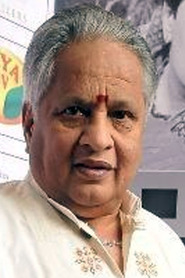
Visu
Visu is an Indian actor, best known for Tamil cinema. Visu began their career in 1978. With over 90 credits to their name, Visu remains one of the most prolific and celebrated talents in the industry. Spanning 40+ years, Visu's career remains one of the longest and most celebrated in Tamil cinema.
Career Milestones
Began career as assistant director and screenwriter under K. Balachander, writing scripts for major Tamil films
Directorial debut with Manal Kayiru
Won National Film Award for Best Popular Film Providing Wholesome Entertainment — first Tamil film to receive this honour
View film →Won Filmfare Award for Best Film (Tamil)
View film →Won National Film Award for Best Film on Other Social Issues
Iconic Roles
Samsaram Adhu Minsaram
The principled joint-family patriarch and government clerk who serves as the moral anchor of the household, navigating financial and generational conflicts while striving to preserve family unity. The film won the National Film Award for Best Popular Film Providing Wholesome Entertainment.
Penmani Aval Kanmani
A warm, wandering fixer who moves between neighbourhoods, stages events, and resolves domestic troubles in families he encounters, embodying Visu's signature theme of middle-class family problem-solving.
Varavu Nalla Uravu
The lead patriarch whose close-knit, love-driven family is contrasted with his wealthy best friend's cold, machine-like household, illustrating Visu's recurring thesis that human bonds matter more than material wealth.
Chidambara Rahasiyam
A pragmatic CID officer in this cult-classic comedy-thriller, where Visu's understated delivery emphasised commonsense problem-solving over melodrama.
Defining Moments
Debut as character actor establishing his trademark joint-family setting and ensemble storytelling, with all characters given equal narrative weight.
Ran over 100 days in theatres and introduced Visu's defining cinematic formula — the joint household as a microcosm of Tamil middle-class society — which he refined across a decade of films.
Joint family patriarch mediating domestic disputes — Visu plays the calm, wise head of a large joint family navigating conflicts between sons, daughters-in-law, and elders with sharp dialogue and wit.
This became Visu's signature archetype — the middle-class Tamil patriarch solving family problems with moral clarity. The film ran to packed houses and defined his brand of socially conscious family drama.
View film →Directing a women-centric domestic drama that brought actress Jayashree into prominence, focusing on a wife navigating societal expectations and marital tensions.
Demonstrated Visu's rare ability to center female perspectives in Tamil family films at a time when heroines were largely decorative; became a key reference point for women-driven middle-class narratives.
View film →Realistic depiction of a middle-class man's descent into alcoholism and its devastation on his family — Visu wrote and directed this with unflinching honesty, avoiding melodrama.
Won the National Film Award for Best Film on Other Social Issues — the crowning achievement of Visu's career validating his thesis that Tamil cinema could address real social crises without song-and-dance escapism.
Supporting role alongside Rajinikanth — Visu's grounded, realistic acting style contrasted with and complemented Rajinikanth's superstar screen presence.
Showed Visu's versatility as a character actor beyond his own directorial vehicles; the film was a blockbuster hit, giving his naturalistic style mass commercial exposure.
View film →Visu by the Numbers
If you watched every Visu film back-to-back, you'd be at it for roughly 7 days and 4h. Most-paired with Delhi Ganesh — 10 films together.
Filmography
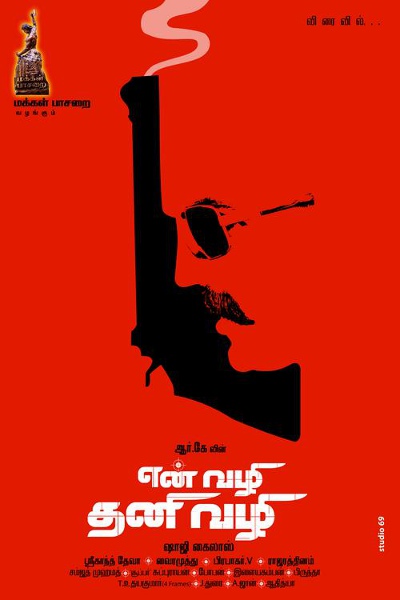
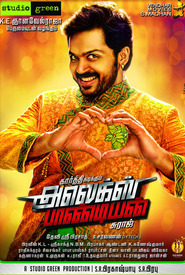
See all 90 credits →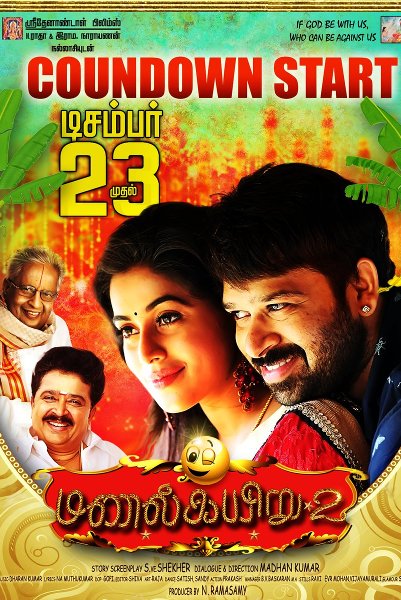




Collaboration Network
The Constellation
Top 10 most-paired collaborators. Bubble size and line thickness reflect how many films they share with Visu.
Career Analytics
Language Distribution
Films by Decade
Top Co-Actors
See all →Visu has worked most frequently with P. Vasu (4 films), T. P. Gajendran (3 films), S. P. Muthuraman (3 films), Shaji Kailas (2 films), and Keyaar (2 films).






Did You Know?
Visu was a prominent Tamil film director, screenwriter, and actor known for his middle-class family dramas.
He began his career as an assistant to director K. Balachander.
He was known for writing and directing films that often featured strong ensemble casts and social themes.
Visu founded the drama troupe 'Visu Chellam' which staged many popular plays.
He received the Tamil Nadu State Film Award for Best Dialogue Writer for the film 'Samsaram Adhu Minsaram' (1986).
Legacy & Influence
Visu, born Viswanathan, was a pivotal figure in Tamil cinema, renowned for his multifaceted contributions as a writer, director, and character actor. His career trajectory is marked by a deliberate shift from acting to creating socially conscious, middle-class family dramas that resonated deeply with the common audience. Beginning as an assistant to the legendary director K. Balachander, Visu honed his craft in storytelling and character development. His directorial debut, 'Samsaram Adhu Minsaram' (1986), was a landmark film that established his signature style: ensemble casts, witty dialogue, and narratives centered on domestic conflicts, ethical dilemmas, and societal norms within a familial framework. This film, along with subsequent works like 'Penmani Aval Kanmani' and 'Sathi Leelavathi', defined a popular genre in the 1980s and 1990s, offering wholesome entertainment that was both relatable and reformist in tone. As a writer, his strength lay in crafting strong female characters and using humor as a tool for social commentary, often highlighting the hypocrisy and pressures within middle-class households. His acting roles, though fewer, were memorable, such as his comedic performance in 'Thillu Mullu' (1981). Visu's primary contribution was democratizing Tamil cinema's subject matter, moving it away from grandiose themes to the intricacies of everyday life, thereby influencing a generation of filmmakers who explored similar domestic spaces. His work provided a platform for many character artists and upheld narrative-driven cinema during a period dominated by star vehicles.